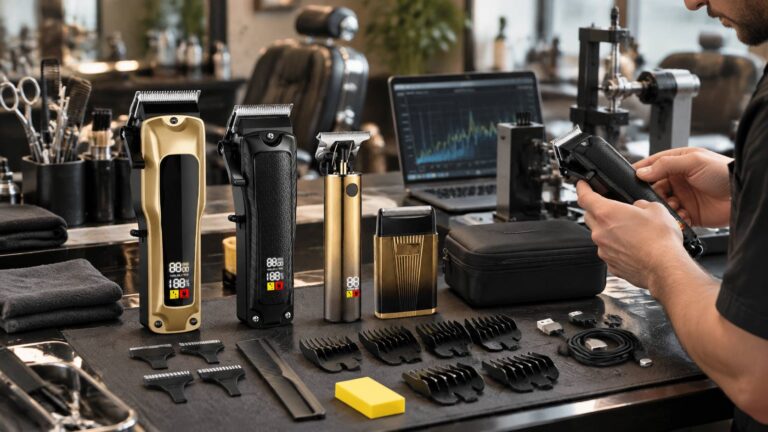


Hair clipper guards work as important add-ons that control how much hair stays after a trim. Each one pairs with a specific cut length. That length usually gets measured in millimeters or inches. These attachments help achieve uniform results and precise cuts in all sorts of haircut designs. Trained barbers count on them to stay on point. In turn, they provide dependable finishes for people seeking varied styles.
The number system for clipper guards stays easy to grasp. Smaller numbers stand for closer cuts. Larger numbers let more hair stay in place. Common options run from #0, which produces an ultra-close shave, to #8, which keeps roughly one inch behind. Barbers commonly blend a few guards together. They use this approach to build even transitions and soft fades across head sections.
Many brands follow close numbering patterns. But slight changes in true sizes can arise. Metal guards for clippers tend to deliver stronger build and sharper accuracy over plastic types. However, pieces from one maker might not snap onto tools from a different one. Specialists have to test the match upfront. Doing so prevents rough edges in cuts or injury to the gear.
Charts for conversions make practical tools. They allow barbers to line up guard sizes from assorted brands. Metric measures and inch-based ones show up regularly in the barbering world. For that reason, experts ought to master both setups. Storing a paper or online chart close by picks up the pace. Plus, it helps deliver consistent work for patrons.
A range of haircut types ties into specific guard numbers. Those numbers define the end look and touch.
A buzz cut offers a clean, no-fuss look that demands scant care. It matches level surfaces linked to armed forces trim standards.
This style holds a touch more length compared to a buzz cut. Still, it holds a crisp border. Plenty of office workers favor it for a tidy yet bumpy finish. Such a choice fits routine days nicely.
Taper styles form steady changes from trimmed sides to fuller crowns. Barbers shift to adjacent guard levels. Alternatively, they fine-tune the clipper arms. Through these steps, they craft even fades. The feel contrasts stand out plainly.
Such guards hold plenty of length for brushing or stacked forms. They match folks aiming to keep bulk. Meanwhile, they straighten the general outline.
Even mixing happens by alternating near guard levels. That wipes out hard lines among cut depths. Clipper arms permit small tweaks. Folks skip frequent guard swaps this way. These approaches matter a lot in shop cuts. They aid in forming complex blends.
Steady care secures keen edges per job. Right after a session, wipe the blade clean. A tiny brush clears stray hairs and particles effectively. With electric hair clippers and pet electric trimmers, select blades permit rinse cleaning. When that’s an option, break them down and wash under cool water. Next, let them air dry completely. On razors, pass the edge beneath the faucet. Frequently, place one drop of dedicated clip oil along the blade side. Run the tool briefly. This even coats the surface. It boosts the blade’s endurance. These habits preserve cut keenness. They further shield the drive’s operation through the years.
Barbers who handle busy schedules know that precision starts with the right tools. Guards play a central role here. But technique matters just as much. For instance, when aiming for a fade, start at the bottom with a low guard. Then, gradually move up. Use the lever to blend without stopping. This creates a natural flow. Clients notice the difference. It gives a professional edge that stands out.
In practice, many pros keep a set of guards organized. They label them clearly. This saves time during cuts. It also reduces errors. Remember, every head differs. Hair grows at different rates. So, adjust on the fly. Listen to client input too. That builds trust. Over time, these habits turn good cuts into great ones.
Choosing a suitable guard rests on details like hair type, density, curl direction, and target finish. Barbers review these points prior to picking fitting numbers for unique needs. In cases of fades or stacked looks requiring varied depths, merging close guards shines. It yields smooth changes free of stark borders.
Confirming guards attach securely halts bumpy trims or snags in action. Daily scans catch frayed or cracked guards soon. Switch them promptly to stay safe. Moreover, prolonged wear dulls blades. That yanks strands or yields weak slices. Hence, swap blades within 6–12 months. Such timing upholds prime cut quality.
When shopping for guards, consider the material. Metal ones hold up better in heavy use. Plastic suits light home tasks. Check compatibility with your clipper model. Brands vary slightly. A quick test fit avoids headaches. Also, think about the client’s hair texture. Coarse hair needs sturdier guards. Fine hair works with lighter ones. These choices ensure smooth sessions. They keep everyone happy.
Budget plays a role too. Quality guards last longer. Cheap ones wear out fast. Invest wisely. Look for sets that include multiples. That covers most styles. Finally, store them properly. Keep away from moisture. Dust free cases work best. This extends their use. In the end, smart picks lead to better results every time.

From day one, SUOKE Electric has aimed to supply excellent home appliance goods and aid to users everywhere. Yiwu suoke Electric Appliance Co., Ltd. bases itself in Yiwu, Zhejiang. The spot buzzes with trade energy. Right from launch, the outfit has zeroed in on body care power items. The selection covers electric hair clippers suited for shop pros and house users. The outfit runs firm quality reviews. They span from material intake to end checks. All this aligns with CE and ROHS rules.
Today, sales hit large towns across China. The business drives into overseas spots hard. Goods ship to spots such as Europe, America, and Southeast Asia. It forges firm, lasting links with loads of home and abroad traders. Backed by strong post-sale backing, SUOKE KALHELA spans the globe. That means help crews on hand in key areas. The outfit locks in lasting content via fast answers and gear tips.
What sets SUOKE KALHELA apart? Their focus on quality starts early. They source parts from reliable vendors. Each piece gets tested rigorously. This cuts down on defects. Customers get tools that perform well. No surprises there. The company also listens to feedback. They update products based on real use. This keeps them ahead. In markets like Europe, strict rules apply. SUOKE meets them all. That’s why partners trust them. For home users, the cordless designs add ease. Charge once, use all day. Perfect for quick trims. Pros love the power. It handles thick hair without strain. Overall, SUOKE builds a name for dependability. Year after year, they deliver.
Grasping clipper guard systems firmly enables barbers to offer custom finishes each go. They tackle diverse cut types. Deep insight into brand size shifts maintains exactness. That stays solid during tool switches or aligning global client tastes. Linking this know-how to routine care routines vows elite craft. SUOKE KALHELA’s new trim devices display these marks. Access comes through their broad trade web.
In the barber world, knowledge like this pays off big. It turns routine jobs into standout work. Clients return for the skill. Shops gain repeat business. For suppliers like SUOKE, it means steady demand. Their tools fit right in. Easy to use, tough to beat. As trends shift, staying sharp matters. Guards evolve too. New materials, better fits. Pros who learn keep up. That leads to success. Simple as that.
After each session works best, above all in a packed shop setup. Leastwise, add oil after 2-3 home trims. Several drops as blades spin cut down on drag and lift output.
No. Home oils or all-around lubes pull in grime and clog up parts over time. Go for oil made just for clippers and fast motors.
Brush away first. Follow with germ-kill spray or short rinse. On thick gunk, pull off the blade if you can and scrub in hot sudsy water. Dry it all the way before oil and setup again.
Daily wipes and right oil keep top cordless units going 3-5 years in shop use. Full-day grind might trim that down some. Yet, regular tending stretches run far beyond ignored gear.
Yes. It tracks battery left, helping dodge full drains that wear it out. Watching levels cues you to extra wipes or oil after tough jobs.One more thing on care: always unplug before deep cleans. Safety first. It prevents shocks. For battery life, store in cool spots. Heat shortens charge holds. These tips add years. Worth the effort.