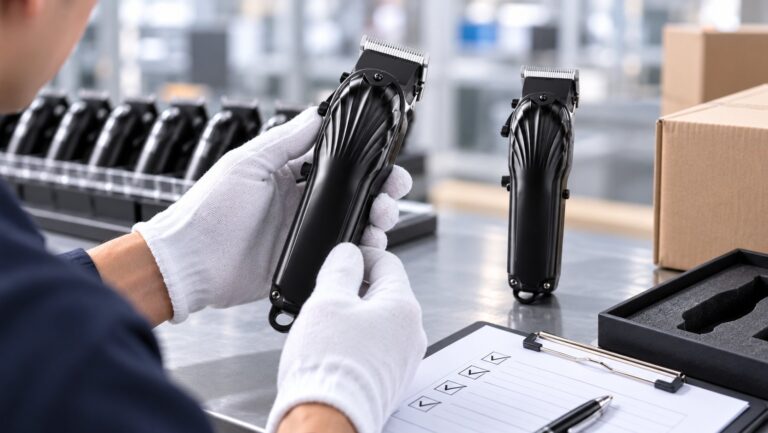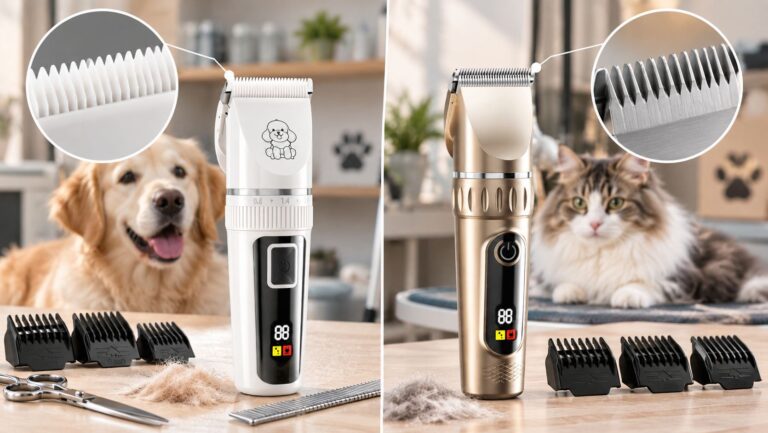


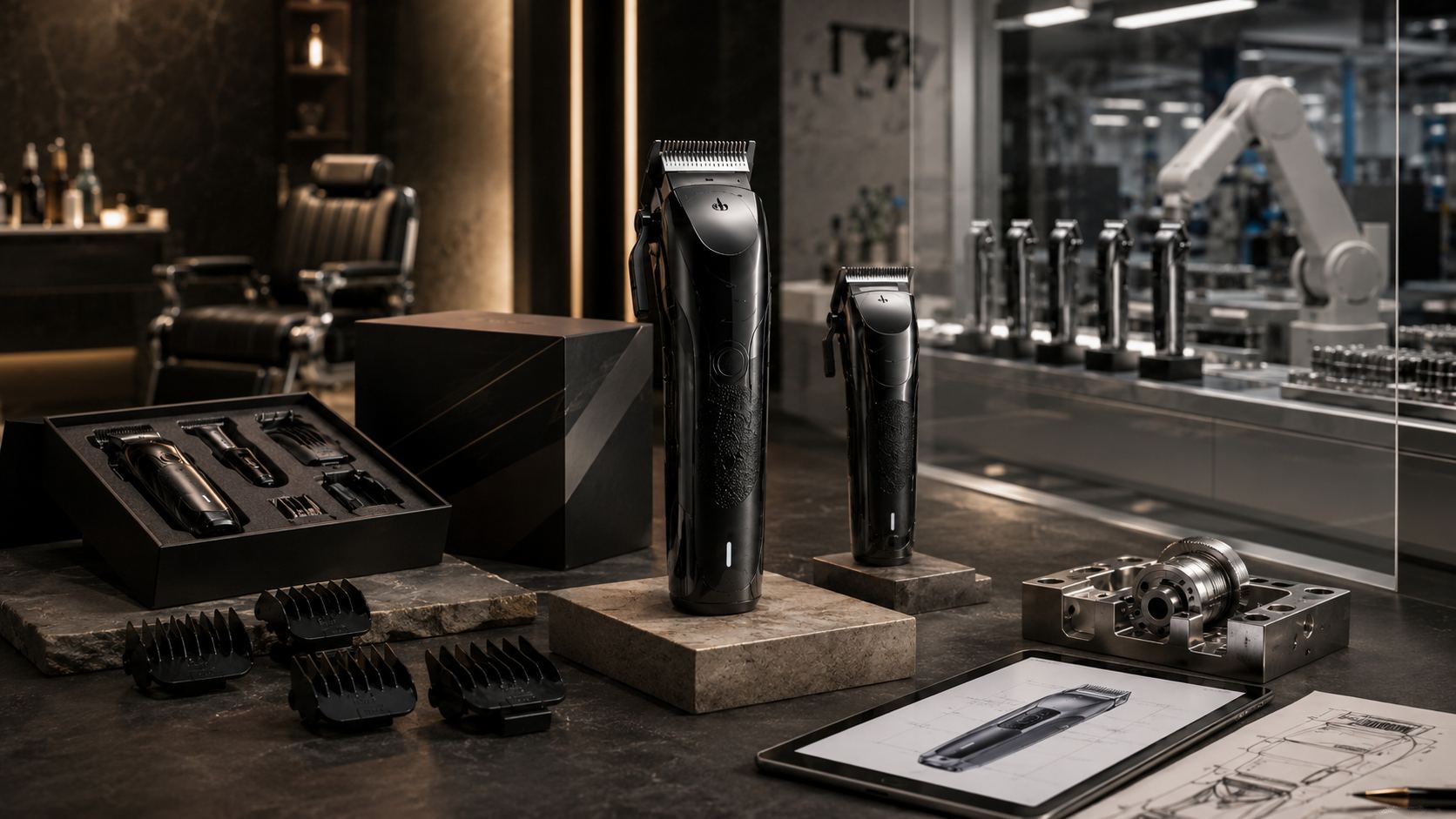
Choosing an original equipment manufacturer (OEM) supplier of hair clippers is not a simple catalog search task. The first concern is that clippers in a sample photo may have some appealing characteristics, such as reduced noise, but may also overheat, pull hair, have low torque under a load, or simply have misaligned blades in the cutting element. Barber brands require a tool that will stand daily use, while a retail brand will seek to balance the performance, cost, packaging, and support features. So, an effective checklist for evaluating potential suppliers includes a motor, blade system, battery, and charging technology, housing and accessories, test procedures, documentation, and change control.
The specification should describe how the clipper behaves in real cutting conditions, not only list motor speed and battery capacity. Torque delivery, blade geometry, heat, vibration, and power stability usually matter more than one headline number.
Rotary, magnetic, and pivot-style drive systems can produce different combinations of speed, torque, noise, and heat. For cordless models, the controller and battery condition also affect how consistently the motor performs as charge level falls.
Buyers should ask for operating speed under no load and under representative cutting load. A unit that slows sharply in dense hair may snag even when its free-running speed appears high. Repeated run testing should record housing temperature, blade temperature, current draw, noise, and vibration.
Blade material, tooth profile, moving-blade stroke, surface finish, hardness, coating, and alignment – all factors that determine the feel of cut. No-gap adjustment may prove useful, yet the potential for accidental skin contact is high, if the tolerances or the user’s skills are insufficient.
Inspect several samples for side play, tooth symmetry, blade flatness, screw retention, and movement after repeated removal. Replacement blades should fit without filing, bending, or manual correction. Comb guards must also lock firmly and correspond to the stated cutting lengths.
While cordless runtime is important, a battery’s properties define the user experience beyond the voltage or ampere-hours rating. The charge time, balancing, protection, power delivery stability, contact resistance, and accessibility – all contribute to the performance and reliability of the tool in long-term use.
Ask for cell chemistry, rated capacity, pack configuration, protection functions, and runtime under a defined load. A barber may use the clipper intermittently throughout a shift, so restart behavior and torque near low charge are worth testing.
Fast charging can be useful, but it raises thermal-management demands. Buyers should monitor pack temperature during charging and operation, especially in enclosed stands or warm barbershops. Battery claims should be tied to the production model, blade setting, and test method.
Confirm input voltage, plug type, adapter rating, cable length, connector design, charging indicator, stand compatibility, and whether the clipper can operate while connected. Loose ports and weak solder joints are common return risks.
A charging stand should hold the unit securely without stressing the connector. For travel-oriented retail models, universal input may be suitable, but destination-market requirements and supplied plug configurations should be defined before packaging approval.
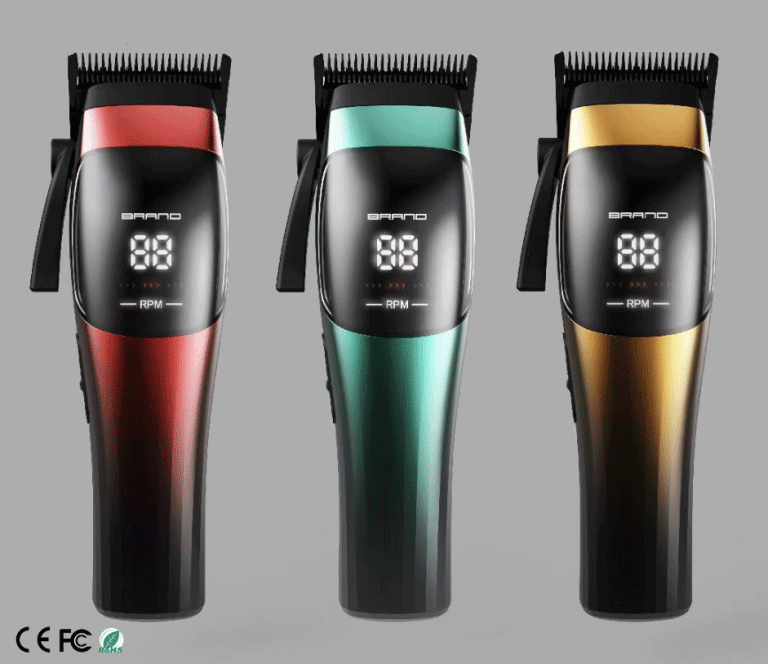
Professional and consumer users often value the same features, but their duty cycles differ. A barber may prioritize blade access, sustained torque, service parts, and balance. A retail buyer may care more about intuitive controls, included guards, presentation, and ease of cleaning.
Barber models should remain stable during repeated fades, bulk removal, and outline work. Grip shape, weight distribution, taper-lever position, switch placement, blade visibility, and cord or battery balance all affect control.
Serviceability matters. Brushes, blades, screws, springs, levers, guards, adapters, and charging stands should be replaceable without changing the entire product. A sealed design may look clean but create avoidable downtime if a small component fails.
Retail products need clear controls, safe blade settings, understandable accessories, and packaging that explains use without overselling performance. Guard numbering, oiling instructions, cleaning guidance, and battery indicators should be easy to follow.
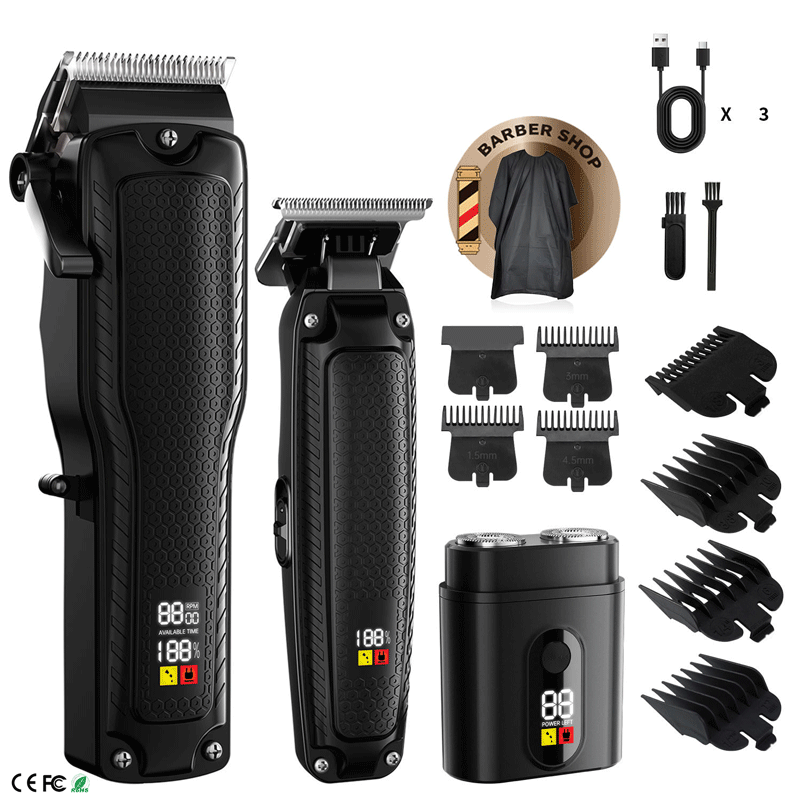
The accessory list should match the product position. Adding many low-grade guards or tools can increase carton size and complaints. A shorter set of accurate, durable accessories is often more useful than an oversized kit with inconsistent fit.
Hair clippers combine precision metal parts, moving assemblies, electronics, batteries, molded housings, and user-contact surfaces. A visual check cannot reveal all failure modes.
Common problems include blade heating, pulling, rattling, switch failure, taper-lever movement, guard release, reduced torque, excessive vibration, battery fade, charging interruption, oil leakage, and loose housing joints.
Run tests should include repeated starts, load cycles, charging cycles, cleaning, blade removal, guard changes, and controlled drops where appropriate. Samples should be evaluated from multiple production positions rather than one hand-selected unit.
The incoming inspection shall include the inspection of blades, motors, cells, PCBs, adapters, switches, and molded parts in accordance with established specifications. The in-process tests shall include blade alignment checks, torque tests, lubrication checks, wiring tests, charging tests, current tests, and housing fit tests.
Final inspection should include cutting performance on representative material, no-load operation, heat, charging, indicators, accessories, labeling, packaging, and carton condition. Batch identification and retained samples make later complaint analysis more reliable.
A polished prototype does not prove production control. The manufacturer should show how it manages tooling, component sourcing, line testing, documentation, and engineering changes across repeat orders.
Request drawings, bill of materials, approved component lists, electrical specifications, blade details, battery information, assembly procedures, test criteria, packaging files, and traceability format. Compliance documents should match the exact model, adapter, battery, plug, and market being quoted.
Besides, the supplier should clearly specify what processes are performed in-house and what are subcontracted. Blade grinding, coating, injection molding, PCB assembly, battery pack assembly, and packaging can be subcontracted, which requires special attention.
Clarify minimum order quantity, tooling ownership, logo and color options, timing of samples, lead time, spares, warranty, accessory replacement, and responsibility for defective accessories.
The purchase agreement should require notice before changes to the motor, blade, cell, PCB, adapter, housing resin, coating, guard material, or packaging. Approved samples and inspection limits should remain the reference for every repeat order.
SUOKE Electric supplies home-appliance products and services for private-label and OEM projects, including hair clipper programs. Buyer can specify target end-users, type of blades, motor if any, battery runtime, way of charging, housing design, guard set, packaging, quantity, and destination market. The samples should be tested for cutting load, blade heating, vibration, noise, battery performance, charging current, guard positioning, switch characteristics, cleaning, and carton protection. The offer shall include the agreed configuration, accessories, tooling, packaging, delivery period, tests items, and change notification rules. Moreover, before sample approval, both parties should agree on samples, drawings, bill of materials, artwork, test limits, and receiving inspection criteria, which production records have to follow.
When searching for an OEM hair clipper manufacturer, it is necessary to technically and commercially qualify the candidates. The process involves determining the motor performance characteristics under load, checking the overall design, testing the cutting element’s alignment, heat generation, battery charging mechanisms, overall ergonomics, accessories, test procedures, traceability, and spare parts availability. For both barbers and retailers, such factors as performance and brand image are paramount, which dictates the need to control each manufacturing step. Thus, an OEM manufacturer that thoroughly documents the approved configuration and carefully manages changes to it will be less inclined to deliver clipper samples with significantly different characteristics than those indicated at the time of sampling.
Provide the target user, blade type, motor requirement, runtime, charging method, housing design, guard set, logo, packaging, order quantity, destination market, and required testing or documentation.
Test cutting under load, blade temperature, vibration, noise, taper-lever stability, guard retention, battery discharge, charging, repeated starts, cleaning, blade removal, and replacement-part fit across several units.
No. Free-running speed does not show torque under load, blade efficiency, heat, or vibration. Buyers should evaluate the motor, controller, blade system, and battery as one assembly.
Useful spares include fixed and moving blades, screws, springs, taper levers, guards, charging cables, adapters, stands, switches, and batteries where the design allows practical replacement.
Approve drawings, components, physical samples, test methods, inspection limits, and packaging before production. Require traceability and written notice before changes to motors, blades, batteries, electronics, or materials.