
Many low noise pet clippers boast a number in terms of decibels, but not all pets are judged by the noise level during a haircut. Vibration, blades’ heat, motor’s sound, machine’s resonancy, pulling force, and operator’s skill may differ. Pet grooming shops require clipper products to be reliable after multiple uses per day, whereas pet grooming product retailers need them to be safe in the hands of ordinary customers. As such, a sensible purchase has to weigh the motor, blades, battery, design, maintenance, and manufacturing quality.
A quieter clipper reduces one source of stress, but it must also cut cleanly. Low torque and hair pulling can make grooming harder despite a low sound reading.
Two clippers can produce similar readings while sounding very different. A smooth, steady motor tone is usually easier to tolerate than rattling, pulsing, or a high-pitched whine. Loose blade parts, worn bearings, motor imbalance, and housing resonance can add unpleasant frequencies.
Noise measurements should state distance, room conditions, operating mode, and whether the blade is fitted. Compare several production samples. Actual coat cutting often reveals vibration and mechanical noise that a no-load figure misses.
Rotary speed, torque, motor mounting, gearing, and internal damping influence sound. Soft mounts can reduce vibration transfer, while a rigid housing may amplify it. Lower speed may reduce noise, but insufficient torque can cause snagging.
The suitable balance depends on the target use. Detail trimming around paws and faces has different load requirements from full-body grooming on double-coated dogs. A multi-speed model can help, provided each setting remains stable under load.
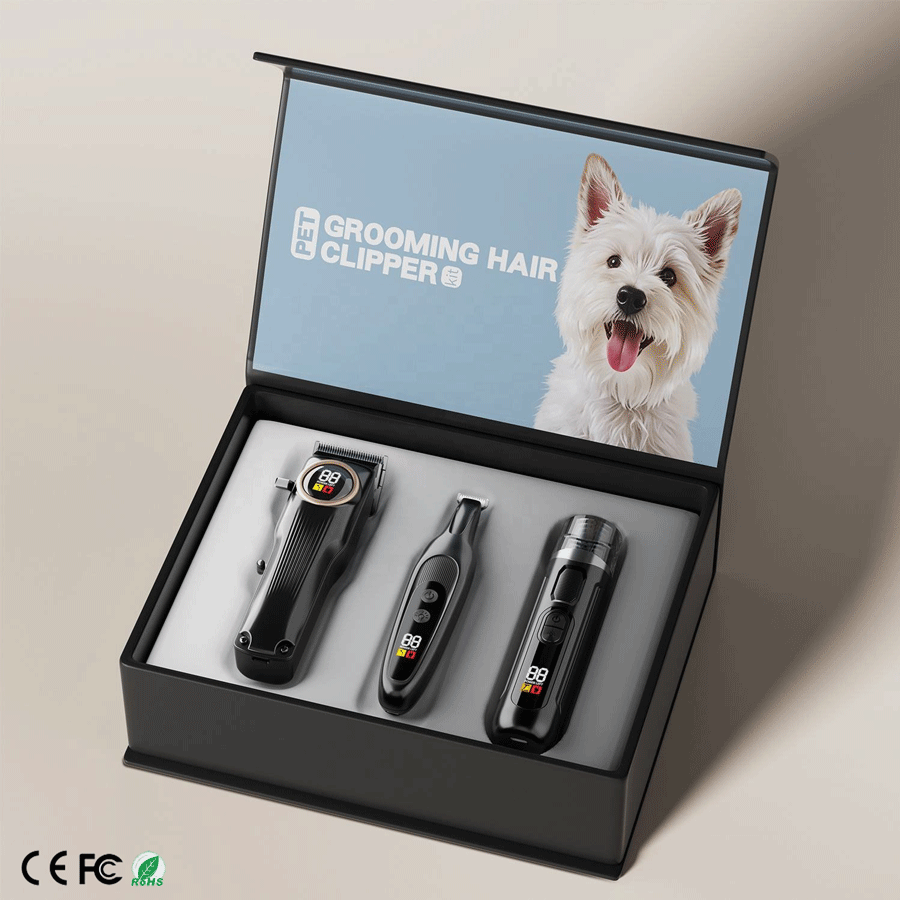
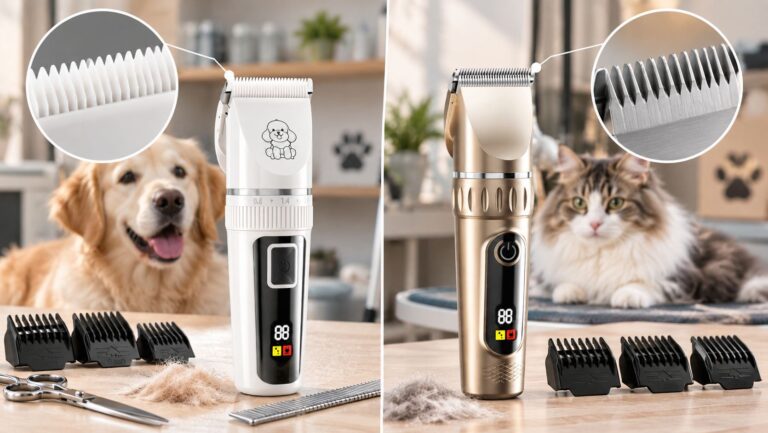
Blade performance determines whether the clipper glides through coat or repeatedly stalls. Buyers should specify cutting purpose, coat type, blade width, tooth spacing, adjustable range, and guard-comb system before approving a model.
Professional users should inspect blade materials, finish, hardness, alignment, side play, spring pressure, and lubrication access. Hair and oil around the drive can make a previously quiet blade noisy.
Temperature rise deserves close attention. Friction, excessive spring force, poor alignment, and insufficient lubrication can heat the blade. Groomers may need interchangeable blade sets or a cleaning routine between animals. The design should allow removal without losing alignment or damaging threads.
Home-use models benefit from rounded tooth tips, clear length markings, secure guards, simple cleaning, and controls that resist accidental activation. Instructions should cover coat preparation, oiling, cleaning, and matted hair.
Comb guards must fit tightly and correspond to their stated lengths. Weak clips can detach during use, while warped guards produce uneven cutting. A smaller accessory set with dependable fit is often more useful than a large kit containing inconsistent pieces.
Cordless operation helps around moving animals, but printed runtime is not enough. Motor load, blade condition, speed, cell quality, and temperature all change actual use time.
Test runtime on representative coat or a controlled load, not only at no load. Record speed stability, low-charge torque, housing temperature, charging time, and restart behavior.
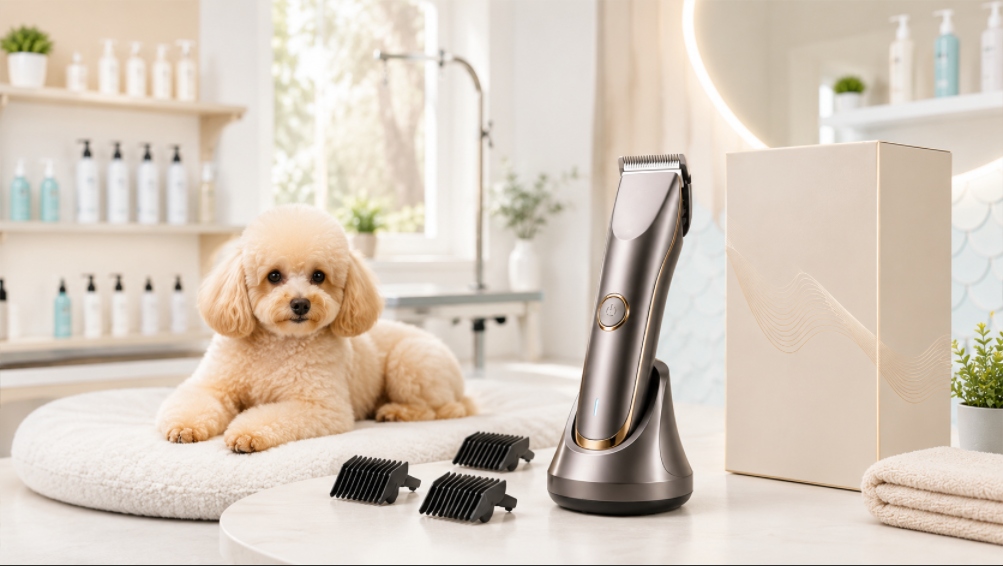
The protection circuit should manage overcharge, over-discharge, short-circuit, and over-temperature. Besides, customers need to consider what input adapter is offered, the plug type, the cable length, presence of a charging indicator, and whether corded operation is supported. Moreover, stands should provide reliable contact, but without the necessity to force the connector.
A clipper that feels acceptable for two minutes may become tiring during a full session. Handle diameter, texture, switch position, center of gravity, and battery placement affect control. Excess vibration makes precise work harder.
Grooming shops should test the unit with wet and dry hands, gloves where used, and different grip positions. Retail sellers should consider whether the housing suits smaller hands and whether controls are intuitive for first-time users.
Low noise claims can vary from batch to batch if motors, bearings, housings, blades, or assembly tolerances change. Production approval needs measurable limits and practical operating checks.
Typical problems include increasing noise, blade chatter, pulling, overheating, battery fade, charging interruption, loose switches, cracked guards, clogged blade drives, and reduced torque. Hair can enter poorly sealed areas and increase resistance or damage the mechanism.
Repeated-use testing should include start-stop cycles, speed changes, loaded cutting, blade removal, cleaning, charging, controlled drops, and temperature storage. Test units from different production stages because one prototype cannot show process variation.
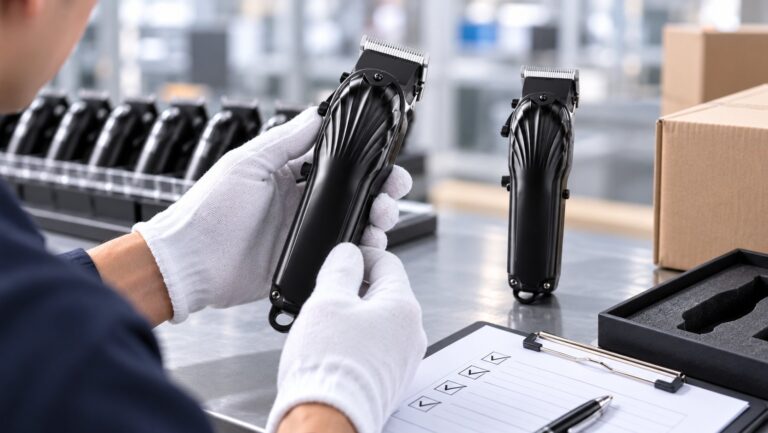
Incoming inspection should verify motors, batteries, PCBs, blades, switches, adapters, housings, and guards against approved specifications. Assembly checks should cover blade alignment, screw torque, lubrication, wiring, motor sound, current draw, charging, and housing fit.
Final inspection should include noise and vibration, cutting response, blade temperature, speed control, battery function, accessories, labeling, and carton condition. Batch codes and retained samples support complaint analysis when a seller receives reports from the field.

A capable supplier should explain how sound, vibration, cutting performance, heat, and battery behavior are controlled together. A quiet no-load sample is not enough if the production version struggles with thick coat.
Request drawings, bill of materials, motor and battery specifications, blade details, inspection procedures, packaging files, and required market documents. Reports should match the exact model, adapter, battery, and plug.
Samples should be tested on the coat types expected in the target market. Buyers should compare units after warm-up, after cleaning, and near low battery. Replacement blades, guards, adapters, and charging parts should also be checked for fit and availability.
Confirm minimum order quantity, sample timing, tooling ownership, color and logo options, production lead time, spare-part supply, warranty handling, and replacement procedures. The purchase specification should require written notice before changes to the motor, blade, battery, PCB, housing resin, switch, adapter, or packaging.
Approved samples and inspection limits should remain the repeat-order reference, especially when retail brands need consistent performance and replacement-part fit.
SUOKE Electric supplies home-appliance products and services for OEM and private-label projects, including pet grooming appliances. Buyers can provide target animal types, coat conditions, blade range, motor performance, sound requirements, battery runtime, charging method, housing design, guard set, packaging, quantity, and destination market. Samples should be reviewed for loaded cutting, motor tone, vibration, blade heat, torque, battery behavior, charging, grip, cleaning, guard fit, and carton protection. Quotations should identify the approved configuration, accessories, tooling, inspection items, lead time, and change-notification terms. Before production, both parties should approve the sample, drawings, bill of materials, artwork, test limits, labels, and receiving criteria.
Low noise pet clippers should be selected by more than a decibel claim. Motor tone, vibration, torque, blade alignment, heat, battery stability, grip, and maintenance determine how the product performs around real animals. Grooming shops need durability and serviceable parts, while pet product sellers need safe controls and clear instructions. Buyers who test loaded performance, control component changes, and retain approved samples are better positioned to avoid inconsistent cutting, returns, and repeat-order surprises.
There is no universal threshold. Buyers should compare measured sound, motor tone, vibration, and cutting behavior under load because a low reading does not prevent rattling, pulling, or heat.
Some are, but torque and blade design must be tested on dense or double coats. A quiet motor that slows under load may pull hair and extend grooming time.
Test loaded cutting, blade heat, vibration, noise, runtime, charging, guard fit, cleaning, repeated starts, speed stability, grip comfort, spare-blade replacement, and performance near low battery.
Useful parts include fixed and moving blades, guards, screws, springs, blade drives, cleaning brushes, charging cables, adapters, stands, and batteries where practical replacement is supported.
Request the test distance, room conditions, operating mode, and measurement method. Then compare several production samples during no-load operation and representative coat cutting after the clipper warms up.