
Travel grooming products are judged on the smallest of details: a trimmer that makes an annoying sound in the hotel bathroom, the battery that runs out during the trip, and a cap that does not close properly, allowing the clipped hair to mix with other cosmetics in a toiletry bag. USB rechargeable nose hair trimmers are a hit with retailers because of their convenience and small size, offering to create a gift basket with shavers, beard trimmers, and other personal care gadgets. However, the seemingly simple product requires much attention and consideration from buyers who want to ensure that they choose the best option in terms of cutting geometry, motor vibration, charging mechanism, cleanliness, noise, packaging, and repeat purchase.
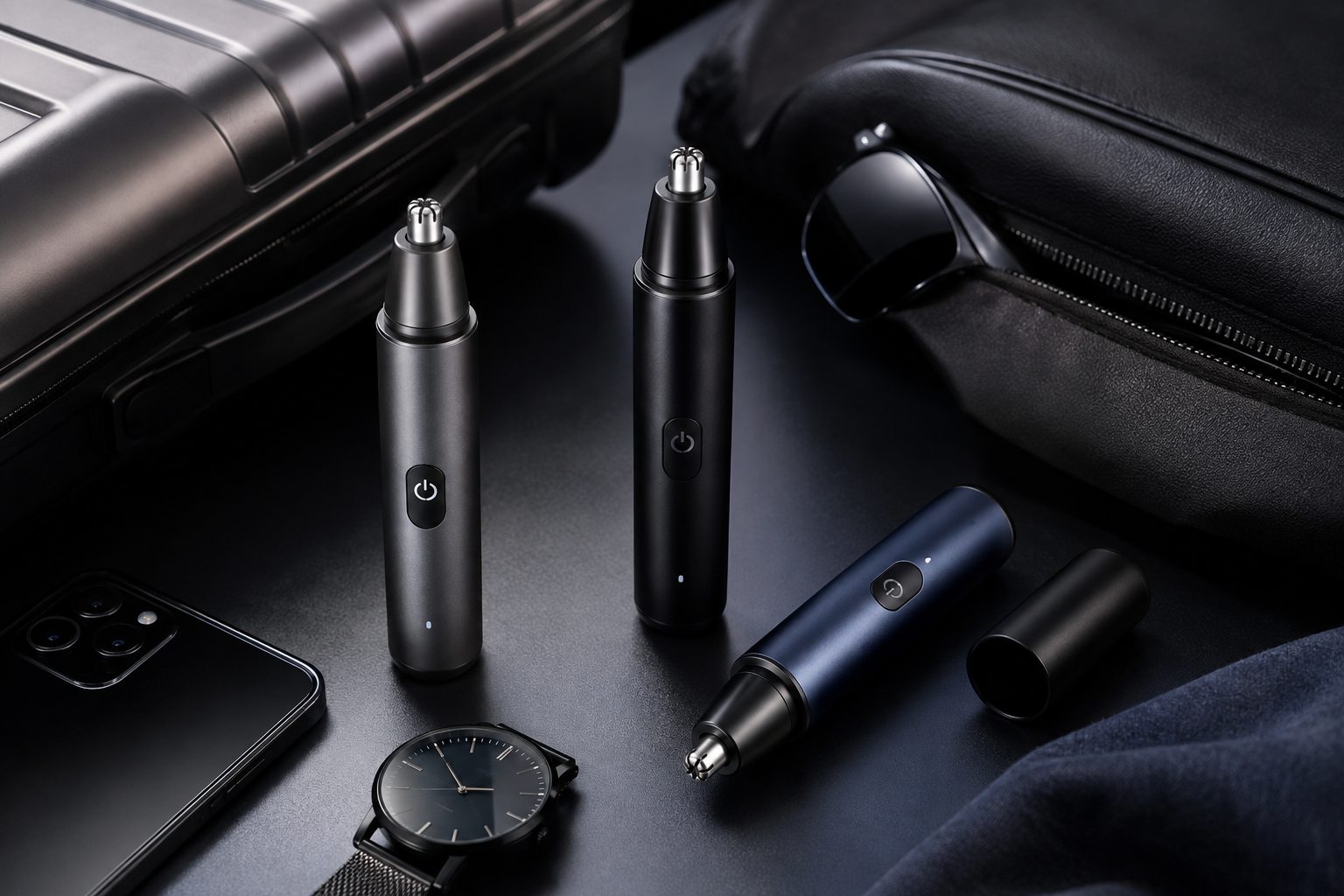
A travel model must tolerate movement, irregular charging, and repeated packing. Compact size helps, but shrinking the housing too far can weaken grip, shorten runtime, or make the cutter head awkward to clean.
A secure cap is more useful than a decorative one. It should stay attached after vibration and protect the cutting head without pressing on the blade assembly. A recessed power button also reduces accidental activation.
The housing should remain easy to hold with damp fingers. Buyers should inspect seams around the charging port and cutter head because those areas collect moisture, dust, and hair.
USB charging removes disposable batteries and makes the trimmer easier to use with common travel power sources. Port type, cable fit, charge indication, protection circuitry, and operation while charging all affect customer experience.
A loose or uncommon cable creates avoidable complaints. The battery should support several grooming sessions without constant recharging. Runtime claims need confirmation on production-intent samples rather than an early engineering unit.
The trimmer has one job: remove visible hair without pulling, scratching, or requiring repeated passes. That depends on the relationship between the outer guard, inner blade, motor speed, and cutting angle.
Pulling appears when the blade is dull, the motor slows under load, or hair enters the cutter poorly. A guard with narrow openings may miss thicker hairs. Openings that are too exposed can increase contact risk.
Tests should include different hair lengths and directions. The unit should cut near the nostril entrance without deep insertion. A change in motor pitch can also reveal speed loss before the result visibly worsens.
“Stainless steel” says little about edge finish, hardness, corrosion behavior, or assembly accuracy. Inspect the inner blade for burrs, uneven sharpening, and looseness on the drive shaft. The outer guard should feel smooth against skin.
The cutter head must lock firmly onto the body. Excessive play creates vibration and noise; an overly tight fit makes cleaning frustrating. A removable head is useful only if the connection remains secure after repeated handling.
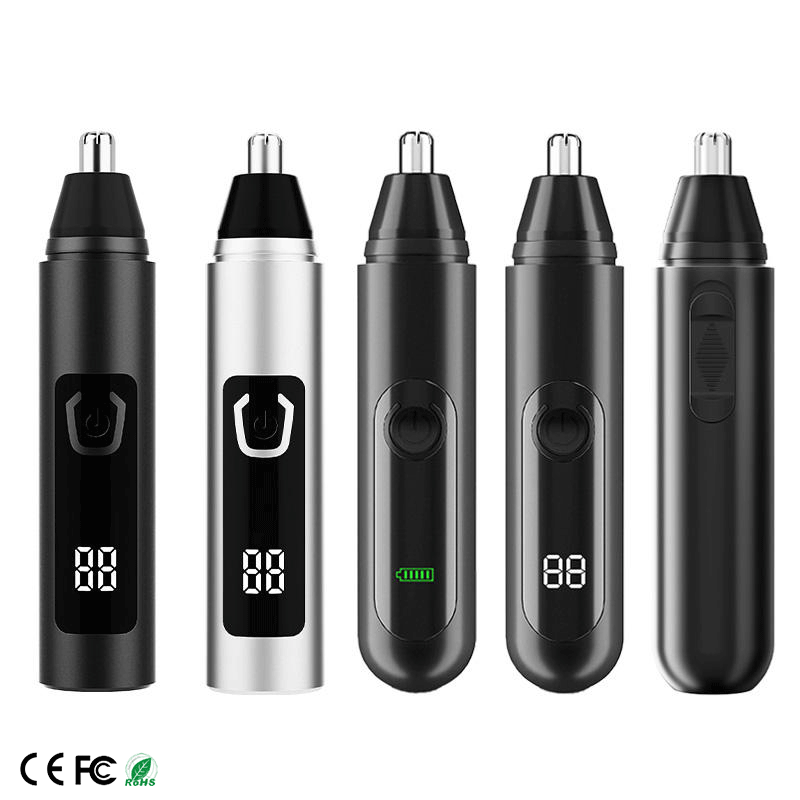
Many returns come from ordinary annoyances rather than total failure. A trimmer may still run but disappoint because it charges slowly, traps hair, smells damp after rinsing, or sounds unexpectedly loud.
Review cell type, rated capacity, charge time, runtime, low-power behavior, and storage performance. The motor should not weaken sharply after a modest drop in battery level. The indicator should distinguish charging, full charge, and low battery without confusing signals.
Storage matters. Samples should be left unused, recharged, and run through repeated cycles. The objective is predictable behavior after normal warehouse and travel conditions, not one impressive runtime number.
A removable head allows clipped hair to be brushed or rinsed away, depending on the design. If water cleaning is permitted, instructions must state whether the full body, the head only, or neither can be rinsed.
Hair should not collect around the drive shaft. Drainage matters too; trapped water can create odor or corrosion. A cleaning brush adds value only when it reaches the areas where debris actually gathers.
A nose hair trimmer rarely stands alone. It may share a shelf with beard trimmers, mini shavers, lint removers, facial brushes, or manicure tools. The range needs a common visual and functional logic without forcing every item into the same housing.
Charging cables, indicator language, packaging dimensions, color palette, and instruction style are sensible areas to align. Standardization lowers confusion and makes bundled gift sets easier to manage.
The trimmer should still suit its own task. Copying the grip or switch from a larger appliance may make it bulky. A coherent collection feels related, but each product should remain comfortable on its own.
A cap, cleaning brush, charging cable, compact pouch, and concise instructions may be useful, although every accessory adds cost and packing work. The pouch should be easy to wipe and large enough to hold the trimmer without pressing the switch.
Packaging should explain charging, cleaning, intended use, and wet-use limits. Internal support matters because a small cutter head can be damaged if the product moves freely in transit.
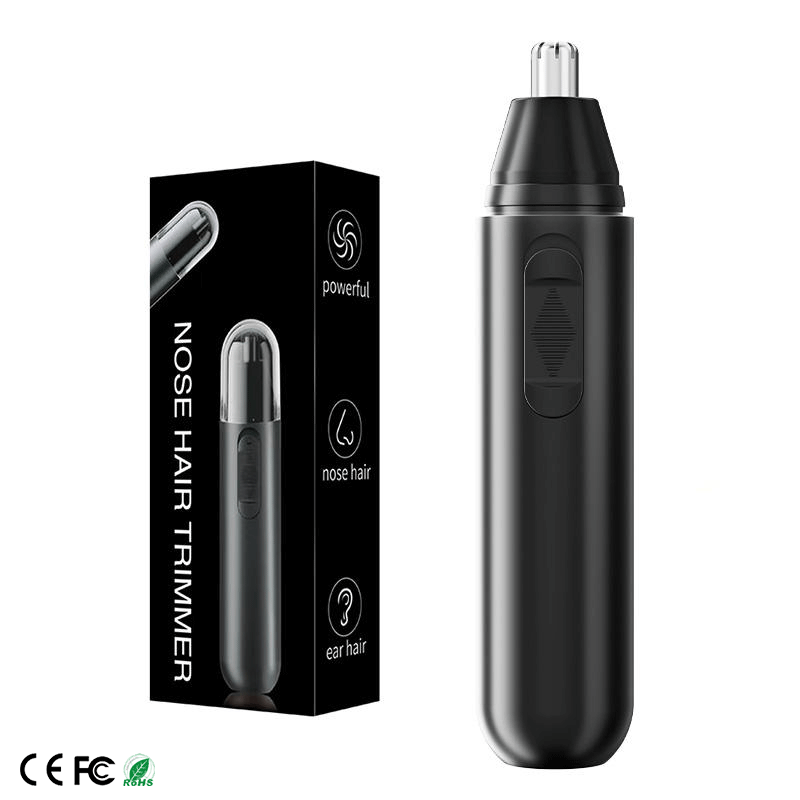
A good sample is only the beginning. The production order must reproduce blade fit, motor behavior, battery performance, charging, finish, and packaging across many units.
Incoming checks should cover housings, batteries, motors, blades, cables, and packaging. During assembly, inspect cutter-head fit, switch operation, charging response, noise, vibration, and finish. Finished units should be checked for cutting function, charging, labeling, and accessory completeness.
A quick power-on test is not enough. A unit can run while still pulling hair, losing speed, or charging inconsistently. Random teardown can reveal loose wiring, poor soldering, hair ingress paths, and uneven blade assembly.
The approved specification should identify housing material, cutter-head construction, blade material, motor, battery, charging port, cable, indicator behavior, accessories, artwork, and packaging. A physical reference sample should carry a version date.
Changes to the battery cell, motor, blade supplier, charging board, finish, or cable should require notice. These substitutions may leave the product looking identical while changing noise, runtime, cutting feel, or failure rate.
SUOKE Electric supplies home appliance products and can support USB rechargeable nose hair trimmer development for travel grooming ranges. A buyer can provide target price, housing size, charging interface, runtime expectations, cleaning method, color direction, accessories, packaging, order quantity, and launch schedule. Project review should define cutter-head construction, blade fit, motor behavior, battery specification, charging indication, noise limits, assembly checks, and sample approval. Before mass production, both parties should appraise the physical sample, component list, artwork, instructions, packing, inspection specification, batch identity, and written change notification requirements for future repetitions of the order, receiving inspection and service in destination markets.
USB rechargeable nose hair trimmers are excellent additions to a traveler’s grooming kit if their compactness is combined with high-quality trimming, convenient charging, easy maintenance, and smart packaging. However, buyers should pay close attention to test the fit of the blades, motor power, battery handling, ability to remove the caps, noise level, and extra tools’ functionality. Moreover, the product’s consistent performance is crucial which can only be achieved with a well-documented production process and a controlled list of parts substitution.
Yes, provided the trimmer has a secure cap, dependable battery, compact charging cable, clear cleaning instructions, and packaging that protects the cutter head during transport and storage.
Pulling may result from dull blades, weak motor speed, poor blade alignment, clogged cutter openings, low battery power, or a guard design that feeds hair unevenly.
Not necessarily. A washable cutter head may be enough. Buyers should confirm which parts can be rinsed, how water drains, and whether the charging port needs protection.
Check charge time, usable runtime, low-battery behavior, storage performance, indicator clarity, cable fit, and consistency after repeated charging cycles rather than relying on one headline capacity.
Approve blade construction, motor, battery, charging port, housing, cap, noise, cleaning method, accessories, artwork, instructions, packaging, inspection criteria, reference samples, and written change-control terms for repeat production.