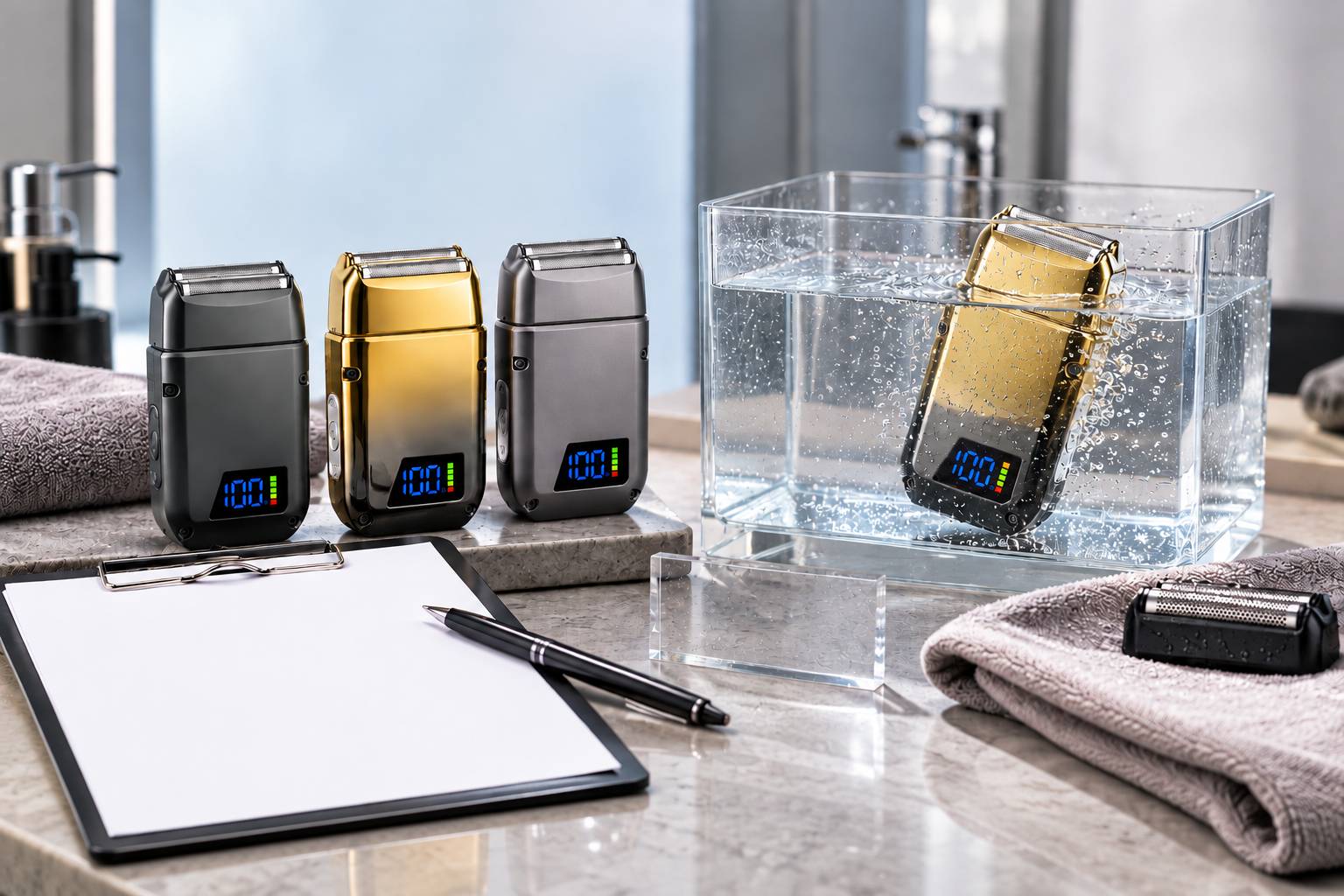
“Waterproof” is one of those specifications that looks easy on a quotation sheet and becomes complicated once a product moves toward production. Two shavers may both be described as waterproof, yet one is meant mainly for rinsing after use while another is designed around wet shaving. For an importer, that difference affects more than marketing language. It touches the housing, buttons, charging area, cleaning instructions, packaging claims, and sometimes the documents used to support the product. The useful question, then, is not simply whether a shaver is waterproof. It is whether the exact version being ordered can support the way the brand plans to sell and describe it.
A sourcing discussion can go wrong very early when the buyer and supplier use the same word but mean different things.
Imagine a brand planning to advertise a shaver as easy to wash under running water. The factory, meanwhile, understands the requirement as “the removable head can be rinsed.” Both sides may believe they agreed on a waterproof model until the packaging artwork is almost finished.
That is why the intended use is worth writing down before sample approval.
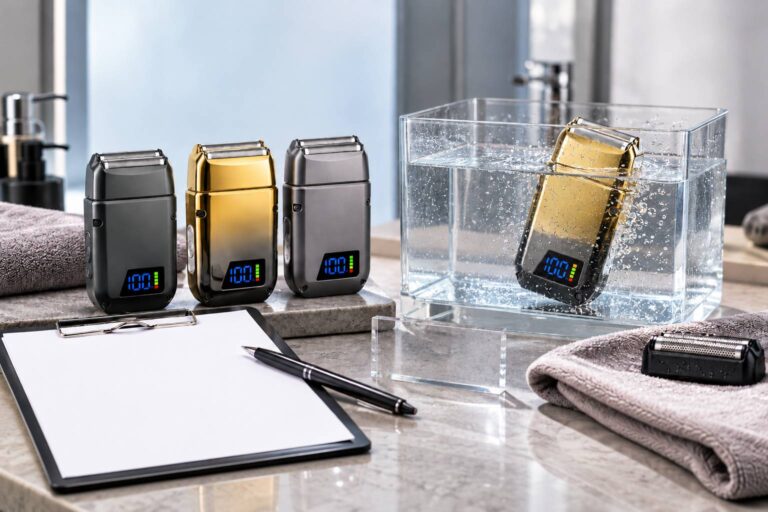
The requirement might be quite limited: the cutting head needs to be removable and washable. Another project may require the complete body to be rinsed after shaving. A wet-and-dry product goes further because the user may shave with water, foam, or gel around the appliance.
Those scenarios should not be grouped together simply because the catalog uses one waterproof icon.
When comparing models, the buyer should first decide what the final customer is supposed to do with the product. Only then does a rating, test report, or construction detail have useful context.
Most water-related problems do not begin in the middle of a solid plastic housing. They usually appear around parts that move, open, connect, or are assembled separately.
The switch is one example. The charging interface is another. The joint below a removable shaving head may also deserve attention, especially when customers are expected to take that head off repeatedly for cleaning.
Rather than looking at one presentation sample, put several units on the table. Press the buttons. Remove and reinstall the heads. Compare the seams. Look at how the charging area has been assembled.
Small differences between samples matter because mass production rarely fails in the same way as a hand-selected sample.
A useful review can focus on a few ordinary questions:
This kind of inspection is not a replacement for formal testing. Its value is different. It can reveal whether the design appears stable enough to reproduce.
A dry sample may look fine.
Use it according to the cleaning method that is supposed to appear in the final instructions. If the head can be rinsed, rinse it. If the complete unit is approved for a specific washing method, follow that method. Dry it in the recommended way and operate it again.
Then do the same with another unit.
What matters here is not creating an artificial stress test. It is seeing whether normal use produces inconsistent behavior before several thousand pieces are packed.

This is where procurement teams need to slow down.
A supplier may have waterproof test information available. That is useful, but the buyer still needs to know which product that information belongs to.
A report for a similar shaver is not automatically evidence for the model in the purchase order. The problem becomes more obvious once private label changes are introduced. A new housing component, different charging structure, revised button, or modified head connection may look minor from a commercial perspective while still changing the construction that was originally tested.
The safest discussion is very specific.
Ask which version was tested. Compare it with the sample in hand. Then identify whether the requested customization changes any part related to water protection.
There is no advantage in demanding a long list of documents if nobody checks whether they correspond to the final unit.
An IP rating can be important, but buyers still need to understand the scope of the finished product claim.
For example, a brand may have adequate technical support for a certain level of water resistance but later create packaging that suggests a broader use. At that point, the sourcing problem has shifted from engineering to communication.
That is why the sample, supporting evidence, manual, and sales claim need to stay connected.
Customers do not see the engineering discussion that happened during sourcing. They see the product and the instructions.
If the manual says one thing while the online listing says something stronger, the actual design is no longer the only issue.
Charging is especially easy to overlook. A shaver may be suitable for rinsing, yet still require the charging interface to be dry before power is connected. If that requirement exists, it needs to be understandable without forcing the customer to interpret vague wording.
The same applies to cleaning.
“Washable” may refer to the head.
“Wet and dry” may describe shaving use.
“Waterproof” may be used as a broader product claim.
Those phrases should not be swapped casually during artwork preparation.
For a private label project, packaging is often produced by a different team from the one that approved the sample. That makes version control important. The carton designer may never see the technical file unless somebody deliberately connects the two.
A practical final artwork check is simply to place the shaver, manual, box copy, and approved specification next to one another. If they describe different levels of water use, the project is not ready.
Repeat orders are where a good first shipment can become difficult.
Suppose the original product performs well and the second order arrives with a slightly different switch assembly. The appearance is almost identical, so the substitution passes a visual review. If that part was involved in sealing, however, the change may matter more than it seems.
The same concern applies to a charging cover, housing joint, head connection, or internal sealing component.
Once the final version is approved, the project file should identify which parts are relevant to the water-resistance design. Those parts should not be treated like ordinary cosmetic substitutions.
A production reference does not need to become a complicated engineering manual. It does need enough information to answer a later question: is this still the same construction that we originally approved?
For most private label programs, that means keeping the approved sample, final water-related claim, cleaning instructions, packaging version, and relevant component references together.
That record becomes particularly useful when a factory proposes a material or component change several months later.

SUOKE Electric supplies personal care electrical appliances for overseas retail, distribution, and OEM/ODM projects. Buyers working on a shaver program can review the current electric shaver range and compare the waterproof requirement against the exact model being considered. One listed option is a waterproof cordless foil shaver. For an actual project, the practical next step is to confirm the intended use, model-specific water-resistance information, charging design, cleaning method, packaging wording, and any private label changes before production. Those requirements can be sent through the contact page.
For a bulk shaver order, waterproofing is less about adding one attractive specification and more about keeping the product, test basis, instructions, and market claim consistent. The process starts with defining how the customer will actually use and clean the shaver. From there, buyers can review the vulnerable parts of the construction, compare several samples, and check that the supporting information belongs to the production version. The important safeguard for repeat orders is simple: parts that influence water resistance should not change quietly just because the outside of the shaver still looks the same.
Not necessarily. Some products allow the shaving head to be rinsed while the handle has different restrictions. The cleaning method needs to be confirmed for the selected model rather than inferred from the removable head.
Start with areas that are assembled separately or handled often, such as housing seams, switches, the charging interface, removable covers, and the connection below the shaving head.
No. The useful question is whether the report or validation information applies to the actual model and construction being purchased. Similar appearance alone does not prove that two versions are technically identical.
Because the carton or online listing can promise more than the verified product supports. The wording used in marketing, the manual, and the approved technical specification should describe the same level of water exposure.
Ask whether any housing, sealing, button, charging, head-connection, or assembly component has changed. If a water-related part is different, its effect should be reviewed before the repeat batch is approved.