
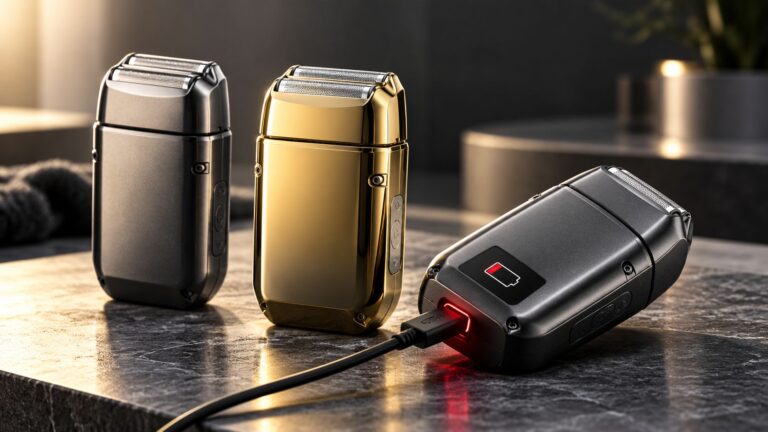


A rechargeable shaver that charges normally on sample approval, shipment and the first few weeks of user operation but then suddenly begins to show irregular or partial charge is more difficult for an importer to interpret than a totally dead on arrival. The charging circuit may have been correct, yet the connector, its condition, the shaver‘s exposure to humidity, the battery‘s age and internal connection activity as well as manufacturing variation, may alter the charging pattern over time. For purchasing and quality assurance teams, the next step with the symptom is to note whether the shaver does not recognise the cable at all; will only charge when the connector is moved; has normal charging but runs for a very short period; or doesn‘t charge anything and stops being recharged at all.
“Not charging” is not descriptive enough for a failure description. One customer may be indicating that the product does nothing when the cable is plugged in. Another may observe that the charging light illuminates, but be disappointed to discover a dead shaver hours later. And another may have to hold the connector at just the right angle. Those descriptions don‘t necessarily describe the same component.
When returned units reach a distributor or factory, start with the visible fault pattern.
|
Symptom |
Possible Area to Investigate |
|---|---|
|
No charging response |
Cable, connector, internal connection, charging circuit |
|
Charging works only at certain angles |
Connector wear or contact issue |
|
Indicator shows charging but runtime stays poor |
Battery condition or charging-control issue |
|
Charging starts and stops |
Connection, cable, moisture, or circuit instability |
|
Unit became unreliable after cleaning |
Moisture or corrosion around charging-related areas |
The table is a diagnostic starting point, not proof of root cause.
The useful question is what changed between normal operation and the first failure. Was the shaver repeatedly plugged and unplugged? Was it stored in a humid bathroom? Did the fault appear after a cleaning routine? Does another cable change the behavior?
This information is far more useful to a supplier than a return note that simply says “charger broken.”
The interface is subject to constant repeated use throughout the lifetime of the product. Even a well-designed connection will be subject to insertion, removal, pull, store, and occasional side load.
With use, a connection may loosen or be contaminated.
A user may find that the shaver will only charge if he or she moves the cable. The cable sometimes may be damaged or frayed but the shaver may be working properly.
For factory or qualified service analysis, an obvious first comparison is the charging accessory.
Use a known-good compatible cable or charging accessory of approved configuration. If the returned unit behaves normally, the original cable or accessory becomes a stronger suspect.
If still a problem, check the condition of the connector and how tight it grips the approved cable.
Contact quality can be altered by debris, corrosion, mechanical wear or looseness.
The key for importers, however, is not to think that each and every charging complaint can be solved through battery replacement. Absent any investigation of the external charging path, service data proves to be an unreliable indicator of actual battery failure.
This also affects spare-parts planning. A low-cost charging accessory can become a significant after-sales issue once thousands of units are in the market.

An aged battery doesn‘t always have the same complaint as a broken charging connector.
While the unit may seem to fully charge as normal it may run for a far shorter period of time than when new. It may reach a full indicated charge quickly and then useable power will decrease more rapidly than expected.
This behaviour nudges the investigation off course from a shaver that is unable to make a charging connection at all.
Charging cannot be judged based solely on indicator.
Run the shaver after the unit has stabilized to its normal charged condition, and compare usable time to a known good sample of the same production version. If a returned shaver charges normally, yet the operating time is significantly lower, battery status should be closely inspected.
If the item continues to not reach charged status or keeps disconnecting, then a charge path or charge control may be more suitable.
The age of the item can be a consideration as well.
A complaint, which occurs early in its life, must be treated quite differently from a unit that has been subjected to a full term of repeated charge and discharge. Importers require this explanation when scrutinizing the return data, otherwise, normal usage can be confused with early-production faults.
The same logic follows for batch analysis. For example, if a large number of new units have similar charge/ run time problems, factory should check if they have the same battery, charging IC or during the same production time.
Rechargeable shavers tend to spend a lot of time in humid environments. While the product may be water-resistant, it’s the cleaning, drying, storing and charging habits that can affect the condition in and around the charging port.
Thus, an intermittent charging problem after repeated use may be caused by factors beyond just mechanical wear.
If a product is used long enough, small amounts of moisture or residue may affect a connector or internal contact, but the product can continue working despite this.
At the outset the fault could be seen as intermittent charging rather than the fault just ceasing.
As a result, an importer should always attempt to determine the length of time the product has been in use: was it rinsed regularly, was the charging area dried prior to hookup, and can corrosion or residue be seen surrounding the area?
The existing product claim and user instructions matter here. A shaver marketed for easy rinsing still needs charging guidance that matches the actual design.
Internal connections create another possible path.
A solder joint or connection that is marginal may survive initial testing and then become less reliable after repeated handling, vibration, or thermal cycling. This kind of problem cannot be confirmed from the outside, so the supplier’s technical team may need to compare failed units with normal units from the same batch.
The goal is not to encourage consumers to open rechargeable appliances. Root-cause work belongs with the factory or a qualified service process.
A charging fault that appears after weeks or months of use is harder to catch than a dead unit at final inspection. A basic power-on and charging check remains useful, but it cannot represent repeated customer use.
This is where sample validation and production control need to go slightly further.
At the development or reliability testing stages, charging-related tests can be repeated connector engagement/disengagement, multiple charge-and-use cycles, inspection of the charging port, and comparison of several samples.
There is no need to measure and carry out a universal number copied from other products. The method should be suitable for the relevant project and reproducible between samples.
If you notice one of the individual units starts having intermittent contact and other units are consistently normal, it might be worth inspecting that one before building-in bulk.
Production records come in handy if field complaints arise at a later time.
The component, production run, or assembly time of returned units that is connected to the problem provides the supplier with much greater information as to whether the problem is an anomaly or a pattern.
When doing repeat orders, substitutions related to charging should not get lost just because the shaver housing looks the same. Using a different cable, a different connector, a different battery, a different charging PCB, or a different internal connection can alter the long-term behaviour even if the short testing still passes.
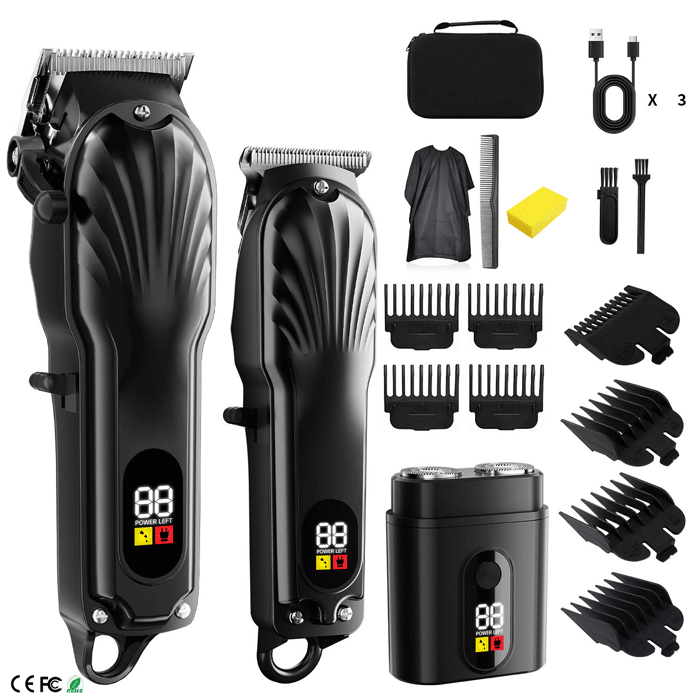
SUOKE Electric manufactures personal care appliances for overseas retail, distribution, and OEM/ODM projects, including rechargeable products within its electric shaver range. Buyers can use the company’s OEM/ODM process to confirm product configuration, private label details, packaging, and technical requirements before mass production. Its service process also covers product confirmation, production coordination, inspection, and shipment preparation, giving importers a point to align charging checks and corrective-action requirements. Project specifications and expected order details can be submitted through the contact page.
A shaver that stops charging after repeated use is not necessarily a failing battery. Wiring, cable and connector wear, contact instability, moisture, aging battery, charging circuitry, and internal wiring faults can all be reported by consumers as a failed shaver. The best fault analysis approach involves first confirming the symptom and then examining the external charging path, running a normal unit against a failed sample, and finally using the failed sample evidence to focus the subsequent factory investigation. Repeat-use testing and additional return flow data will allow you to convert abandoned after-sales complaints into challenges that you will face on the next production cycle.
This could often be an indication that there is an issue with the cable or connector, dirty connector or issue with connection, or connection is loose. Please compare the unit to a working compatible charge accessory before further troubleshooting.
No. Charging may seem okay but an old or faulty cell will have less energy available to use. Both charging and runtime behaviour needs to be considered.
It is possible, depending on how the product is designed and how the charge port area is addressed. Cleaning and drying instructions must correspond with the water-resistance configuration of the product, i.e. prior to charging.
Some fault may evolve slowly such as repeated cable plug-in, battery cycling, humidity, connector wear or poor internal connection. Any of these faults will not be immediately visible in the final inspection.
An example of the actual symptoms, product age, charging accessory used, intermittent or not, use or cleaning history if available, and production batch information. These are the critical pieces of information that make root-cause analysis far more informative.