
A pet clipper blade should be treated as a working component, not just a line in a specification sheet. For distributors, grooming-tool brands, and private label buyers, the useful comparison is not whether ceramic or stainless steel is “better” in general, but how each blade behaves in the intended grooming job, how consistently it performs across samples, how easily it can be cleaned or replaced, and whether the same configuration can be maintained on repeat orders. Blade material influences heat, wear, cutting feel, maintenance, and replacement planning, yet those factors only become meaningful when they are tested on the actual clipper. This article focuses on the checks a buyer can make before committing to volume production.
Blade material is one part of the cutting system. It should be reviewed together with blade geometry, motor behavior, alignment, guide combs, housing design, and the coat conditions the clipper is expected to handle. A material name by itself does not tell the buyer whether the finished clipper will cut smoothly.
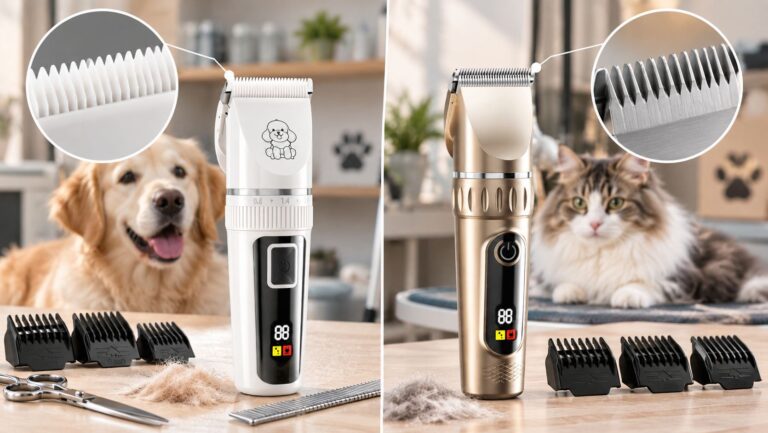
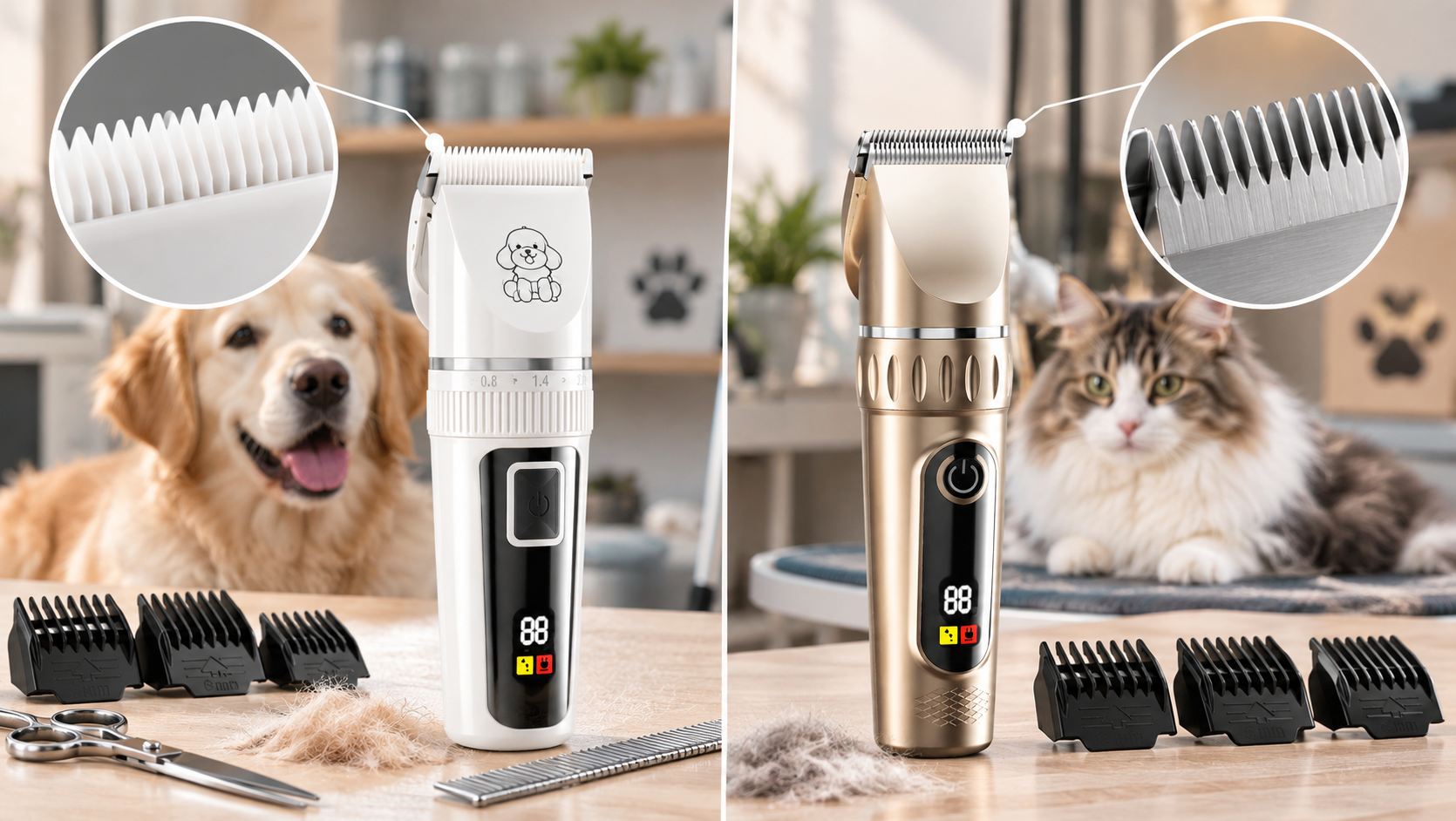
Ceramic blades are often considered when buyers are concerned about heat during use, while stainless steel is widely used where toughness, familiar maintenance, and conventional blade construction are priorities. In practice, the finished result depends on the whole assembly. A poorly aligned ceramic blade will not become a good product because it is ceramic; the same is true for stainless steel.
During supplier discussions, ask for the exact blade configuration fitted to the proposed production model. Then test that configuration without substituting another motor, moving blade, fixed blade, or guard system halfway through the evaluation.
A sourcing team should record what was tested:
| Review Point | What the Buyer Should Confirm | Why It Matters |
|---|---|---|
| Blade material | Actual material used in the approved sample | Prevents later substitution |
| Blade fit | Stable seating and alignment | Influences cutting consistency |
| Moving action | Smooth movement without obvious drag | Affects noise and cutting feel |
| Guard compatibility | Secure fit with supplied combs | Reduces length-control complaints |
| Removal method | How the blade is detached and reinstalled | Influences cleaning and servicing |
The useful decision comes after comparing finished samples under the same conditions, not after comparing material labels.
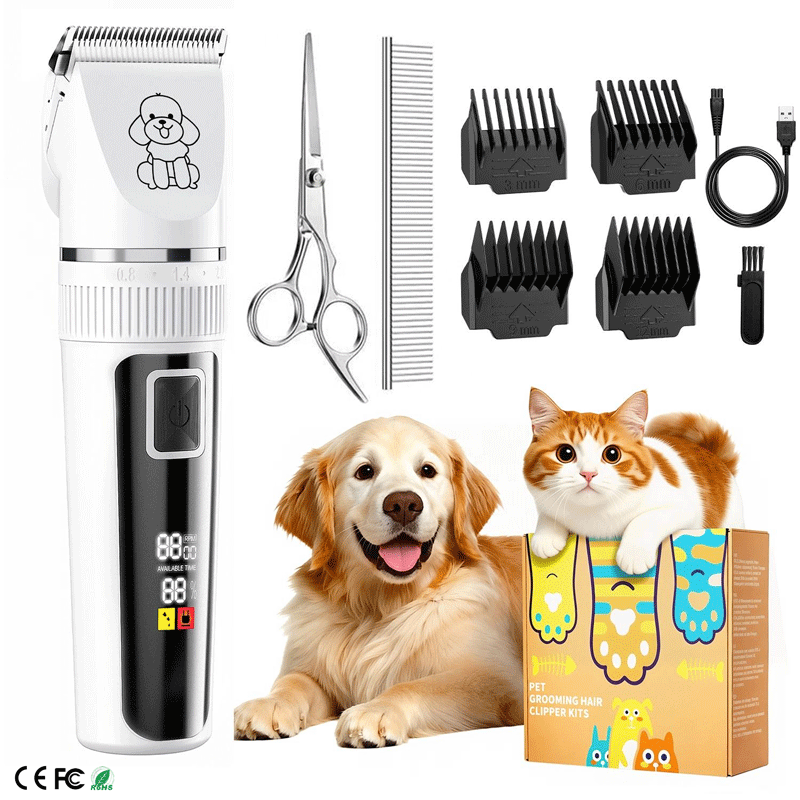
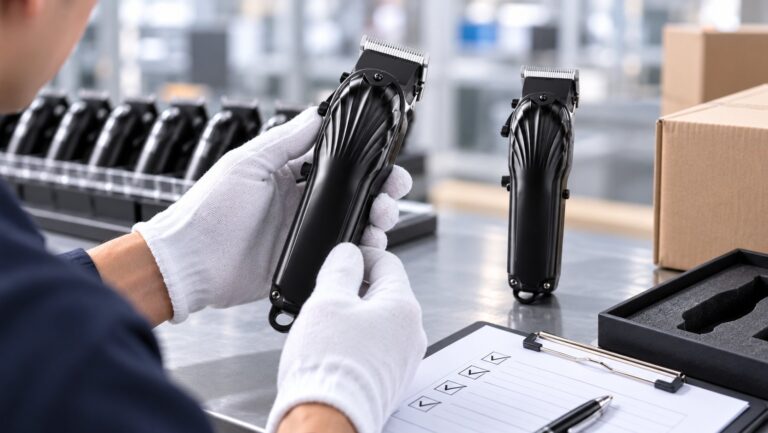
Blade testing needs to reproduce the way the product will actually be used. A short no-load demonstration can confirm that the clipper switches on, but it says little about cutting resistance, heating, hair accumulation, or how the blade behaves after cleaning.
Start by running several samples rather than relying on one unit. Listen for changes in sound, feel for unusual vibration, and check whether the cutting head remains seated properly. Then test the clipper on representative coat material or another agreed test method appropriate to the project.
Blade temperature is not something a buyer should judge from the first thirty seconds. The more useful test is whether heat develops differently between samples during a realistic working period.
There is no reason to invent a universal temperature limit unless the project documents specify one. What matters during sourcing is repeatable comparison. If one unit becomes noticeably warmer than the others under the same conditions, the buyer has a reason to investigate blade friction, alignment, lubrication, or motor behavior.
Cutting residue also matters. Hair caught between the moving and fixed sections can alter performance. After the test, remove the blade if the design allows it, clean it, reinstall it, and run the clipper again. This second cycle often reveals assembly or maintenance problems that a first-use test misses.
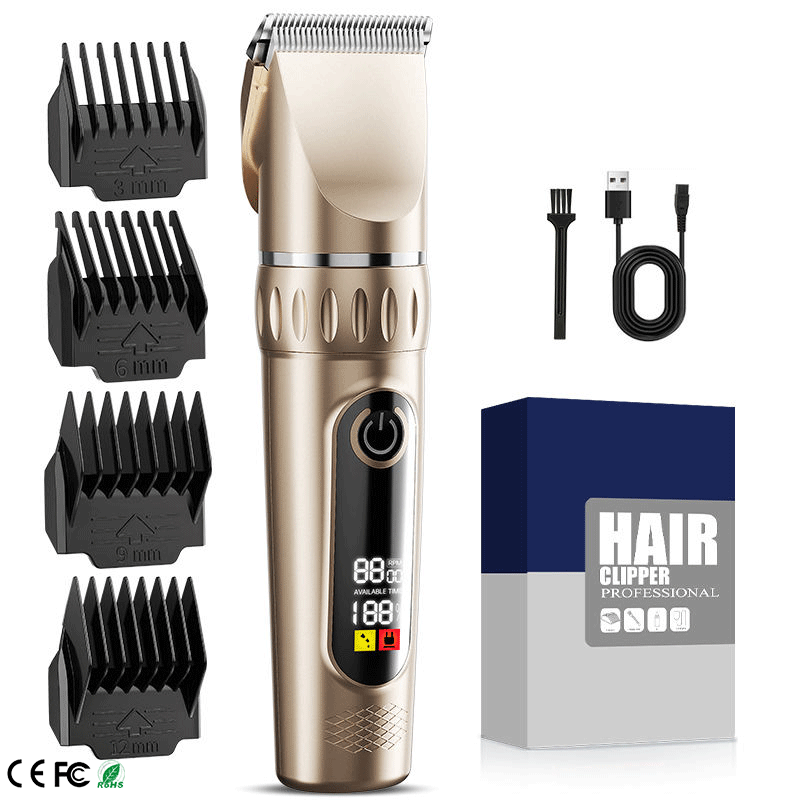
A pet clipper used for occasional household trimming is not working under the same conditions as a tool used repeatedly in a grooming environment. Coat density, matting, trimming area, session length, and the animal’s sensitivity to noise or heat can all change what the buyer should prioritize.
For light touch-up work, ease of handling and cleaning may carry more weight. For thicker coats or longer sessions, buyers may pay closer attention to cutting stability, heat development, and how quickly hair builds up around the blade.
A distributor building a range should avoid assuming that the same cutting assembly belongs in every pet grooming product simply because standardization is convenient.
A compact paw trimmer, a full-body clipper, and a grooming kit serve different jobs. The blade width, exposed cutting area, guard arrangement, and housing around the blade may need to reflect those differences.
This does not mean creating unnecessary variants. It means giving each SKU a clear working role.
Before approving the range, the buyer should be able to answer three questions without referring to marketing language: What area is this tool intended to trim? What coat conditions should it handle? What maintenance will the user realistically perform?
If those answers differ between products, the blade system may need to differ as well.
Blade choice continues to matter after the first shipment. Cleaning, lubrication where required, replacement availability, and compatibility between production batches can influence returns and after-sales work long after the factory invoice has been paid.
A blade that performs well but is difficult to replace can become a commercial problem if the product remains on sale for several seasons.
Ask whether the blade assembly can be ordered separately and how the replacement part will be identified. More importantly, ask whether the fixing points and mating components are expected to remain unchanged.
A minor revision to a blade carrier can create a major service problem when new replacements do not fit units already sold.
Maintenance instructions also need to match the production product. If a blade is removable, the manual should show the correct cleaning and reinstallation process. If lubrication is required, the instruction should reflect the actual blade assembly rather than generic clipper advice copied from another model.
For buyers, the cost question is therefore wider than the blade price itself. It includes replacement stock, service complexity, customer instructions, and the risk created by incompatible later batches.
Once the preferred blade system has passed sample testing, the buyer should stop treating it as an informal choice and make it part of the production reference.
The record should identify the approved blade material, construction, fit, related guard set, cleaning method, and any replaceable components. If the sample changes during negotiation, the final version—not the first one received—should become the reference.
A short pre-production checklist is usually enough:
This matters because blade changes may not be obvious in a finished photograph. A supplier can produce a clipper that looks identical while using a different cutting component. Written change control makes that difference visible before it reaches the market.
SUOKE Electric supplies electric care products for overseas retail, distribution, and OEM/ODM projects, including a pet clipper range with different grooming configurations. The website currently lists an 1800mAh pet grooming clipper with stainless steel cutting tools and a separate ceramic-blade pet trimmer product, giving buyers two blade-material directions to review against their own project requirements. Product confirmation, inspection, packaging, and shipment coordination are also covered in the company’s service process, while project-specific requirements can be sent through the contact page.
Ceramic and stainless steel pet clipper blades should be compared through the complete cutting system rather than by material name alone. Buyers need to look at cutting behavior, heat development, alignment, coat application, cleaning, guard fit, and replacement compatibility across several samples. The final decision should also consider whether the same blade system can be reproduced on repeat orders. Once a configuration is approved, documenting the blade assembly and replacement reference helps reduce both production drift and later after-sales problems.
No. Ceramic may offer useful characteristics in some designs, but performance still depends on alignment, blade geometry, motor behavior, maintenance, and the coat being trimmed. Buyers should compare complete samples rather than select a clipper by blade material alone.
Check cutting behavior, blade fit, vibration, heat development, hair accumulation, cleaning, reassembly, and guide-comb compatibility. Run several samples under the same conditions so differences between units become easier to identify.
A grooming product may stay on sale longer than one production batch. If a later blade or fixing system changes, replacement parts may no longer fit previously sold units, creating warranty and customer-service problems.
Not necessarily. They perform different grooming tasks and may need different cutting widths, guard arrangements, housing geometry, or maintenance approaches. Buyers should define the intended job before standardizing the cutting system.
The production reference should identify the approved material, blade assembly, mounting method, guard compatibility, cleaning requirements, replacement reference, and agreed inspection points. Any later change should be reviewed against that reference.