
The once-high-speed-hair-dryer seems to run fine during a short sample, and then stops minutes later during continuous operation. That‘s a tough failure for an importer since the product shows no sign of a problem on arrival; it starts, blows heat, blows air, and then fails only after a number of other systems have been running for a while (motor, air path, heater, temperature control system). So the unexpected shutdown should be viewed as a system problem rather than a single-device failure. The important sourcing question is not just: can the hair dryer run on the line? But: why does the device stop? What‘s the trigger condition? Do other samples behave the same way? And might a more visible risk emerge during production?
But in reality, that‘s only the end of the story. The minutes before the shutdown might actually tell us more.
Some units may build up heat around the back housing from that can contribute to a reduction of air flow that you may notice. The unit might make a slight difference in sound, or it may stop working and then restart after cooling down.
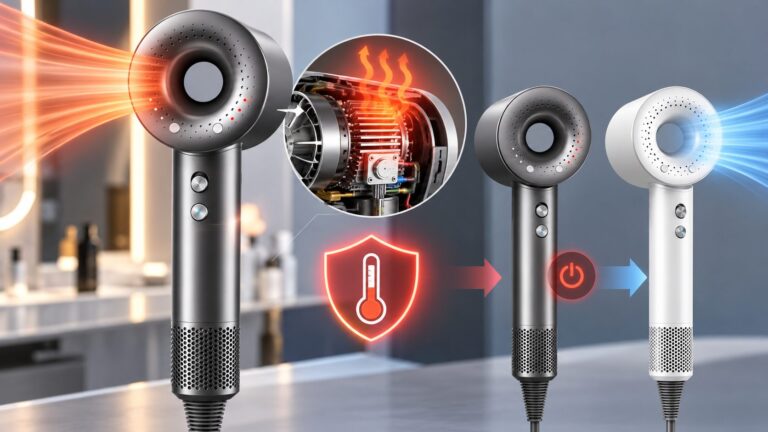
If the dryer returns to power after cooling down, it has tripped a thermal protection device. That alone does not tell the customer immediately what caused the temperature to rise. It could be due to poor airflow, too much heat buildup, a component issue or a variation in assembly.
During sample testing, record what the product was doing when it stopped.A useful comparison can look like this:
|
Observation |
What It May Suggest |
|---|---|
|
Stops only after longer operation |
Heat-related protection or load issue |
|
Airflow becomes weaker first |
Air-path, fan, or motor issue |
|
Housing becomes unusually hot |
Heat is not being removed normally |
|
Only one sample shuts down |
Unit-to-unit variation or assembly problem |
|
Several samples stop at similar times |
Configuration or design issue worth deeper review |
These observations are not a final diagnosis. They help narrow the investigation so that the factory is not simply asked to “replace the motor” without knowing whether the motor caused the problem.
A repeatable failure is especially useful during development. It gives the engineering team something specific to reproduce instead of chasing a complaint that occurs randomly.
A high-speed dryer works by blowing fast-moving air through its relatively compact structure. This air not only dries hair, but also carries heat away from the dryer itself.
If the air path is restricted, the product can run until the internal temperature is raised sufficiently high to activate the protection.
This is why, when a shutdown occurs during continuous use, the rear air inlet, filter structure, internal air channel, fan area, and outlet arrangement should be a concern.
An inlet can look clean while still being partially restricted by a poorly seated filter or an internal part. A housing component may be assembled slightly differently on one unit, reducing the usable air path without creating an obvious cosmetic defect.
That is one reason side-by-side sample testing is useful.
Have several dryers run in identical conditions. Note the motor tone differences and compare the air flow by the same practical method. If one is definitely weaker before shutting off, the airflow system is a candidate for further study.
Also, this failure may be intermittent and may not occur until the product has seen some service in the field. Accumulation of dust or hair surrounding the intake alters the operating condition. This is why the cleaning instructions and filter design are part of the reliability story.
You don’t have to determine an airflow threshold unless the specification already provides for one. What you want to determine immediately is if the approved product is reliable and if the air path can stay open in a normal operating situation.
The first thing people blame when a dryer quits working is its motor, since it is the most visible moving part. However, this can lead to the wrong conclusion.
A defect, something else is wrong. The fan may not be moving enough air while the motor is functioning normally. The heat section may be producing higher-than-normal heat. A thermal sensor or protection device may be isolating the product due to an abnormal condition elsewhere in the product.
The fault must be separated according to behavior.
Once you determine airflow is reducing but the heat is still efficient, it may be time to look at the motor, fan, or air path. When air flow is the same but the house temperature is rising, suspect heat control or heater issues.
In the event that the unit turns off and then turns on again after having cooled, the protection function might actually be working properly. The real question becomes: why did the product reach that condition?
For factory-side fault analysis, the sequence is more useful than a general complaint such as “dryer overheats.”
A technical review may compare:
airflow before shutdown;
motor sound and vibration;
temperature-control behavior;
fan condition;
inlet and outlet obstruction;
assembly differences between normal and abnormal samples.
The buyer does not need to troubleshoot every electronic component. It is sufficient if the vendor can locate a failure to a particular cause, and demonstrate that the repair action corrects this cause and not just replaced the failures.
A test sample of a single product is frequently given more attention than a typical production item.
When mass producing a product, the tolerance of the parts, the position of the assembly, wire routing, fit of the filter, positioning of the housing, or variation of the incoming part could all affect the heat and airflow.
None of these differences has to be drastic. A few minor variations can add up to a design that operates nearer to its safety envelope.
That is why “the original sample never stopped” is not enough to close the investigation.
This is more useful than comparing the failed dryer only with a months-old development sample.
If the two units were produced from the same order, the factory can look for real production differences:
fan installation;
air-path obstruction;
housing fit;
motor condition;
temperature-control parts;
internal assembly.
If only a few units show a fault, it could indicate an assembly or part variation. If many units show a fault with the same test conditions, this suggests a more extensive review of the design or operating conditions as approved is required.
The distinction is important from a commercial perspective. Fixing a small number of assembly defects is not the same as finding that the overall production configuration is approaching the thermal limit.
Continuous-use testing should happen before the order reaches the point where a large quantity has already been packed.
The single best test is not simply “run the dryer for a long time.” It is to compare several production-intent units and notate what occurs when the product is subjected to the type of operation that is typical of what is anticipated in the goal channel.
For instance, a drying system designed for a salon may be required to work for longer periods than a simple lightweight product designed for the home.
Before release, the project record can identify:
the approved motor and fan configuration;
air-inlet and filter design;
temperature-control components;
continuous-use test method;
shutdown or protection behavior;
any parts that require review if substituted later.
If one sample stops unexpectedly, the corrective action should be confirmed on more than the repaired unit.
The same fault should be tested again across additional samples. Otherwise, the factory may prove only that one product was fixed, not that the production cause has been removed.
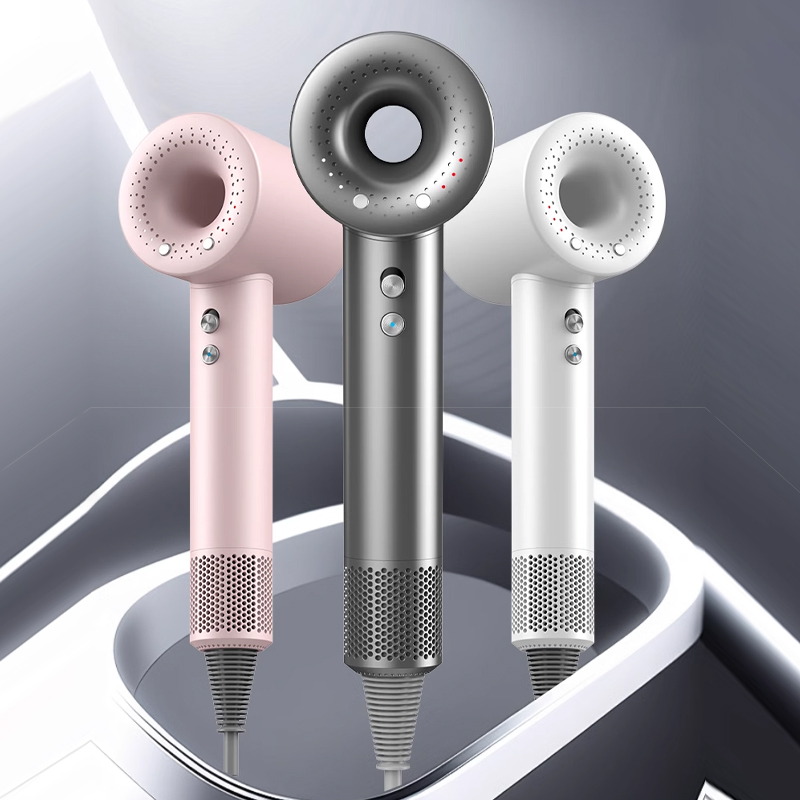
SUOKE Electric supplies personal care electrical appliances for overseas retail, distribution, and OEM/ODM projects. Hair dryer buyers can review the company’s hair dryer range and align product configuration, private label requirements, packaging, inspection, and production details through its OEM/ODM process. The company also describes production coordination and quality-control support within its service process, which can be used to confirm continuous-use testing and corrective-action requirements before shipment. Project specifications and target-market information can be submitted through the contact page.
A blow-up under full load is generally a symptom and not the entirety of the blame. Restriction of airflow, the operation of the fan or motor, the conditions of heat-control, and variation in manufacturing can all result in a comparable consumer problem. The sensible response is to duplicate the malfunction, document what modifications led up to the power failure, compare abnormal units with standard samples, and test the fix on greater than one device.
No. The motor is just one possible culprit. Other reasons for long-time shutdown include inadequate airflow, overheat, TCC mode, fan issues, and assembly tolerance.
It could also show that a thermal protection function has been activated. The key step now is to determine the reason why the product got too hot rather than diagnosing a fault with the protection device.
Comparison helps separate a single-unit fault from a wider product issue. If only one sample stops, assembly or component variation becomes more likely. Similar behavior across several units may point to the configuration itself.
Yes. Restricted intake can reduce cooling airflow. The reason may be dust, filter design, assembly, or another obstruction, so the complete air path needs to be reviewed.
Ask for the identified root cause, the corrective action, and evidence that additional units were retested. Repairing one failed sample is less useful than proving the same issue has been controlled across production.