
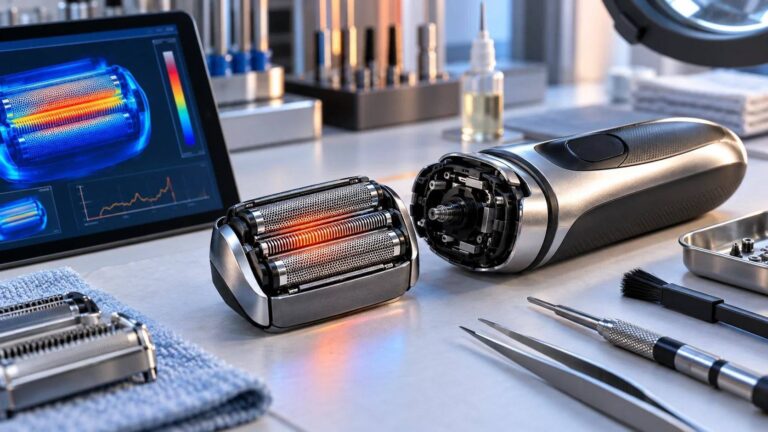

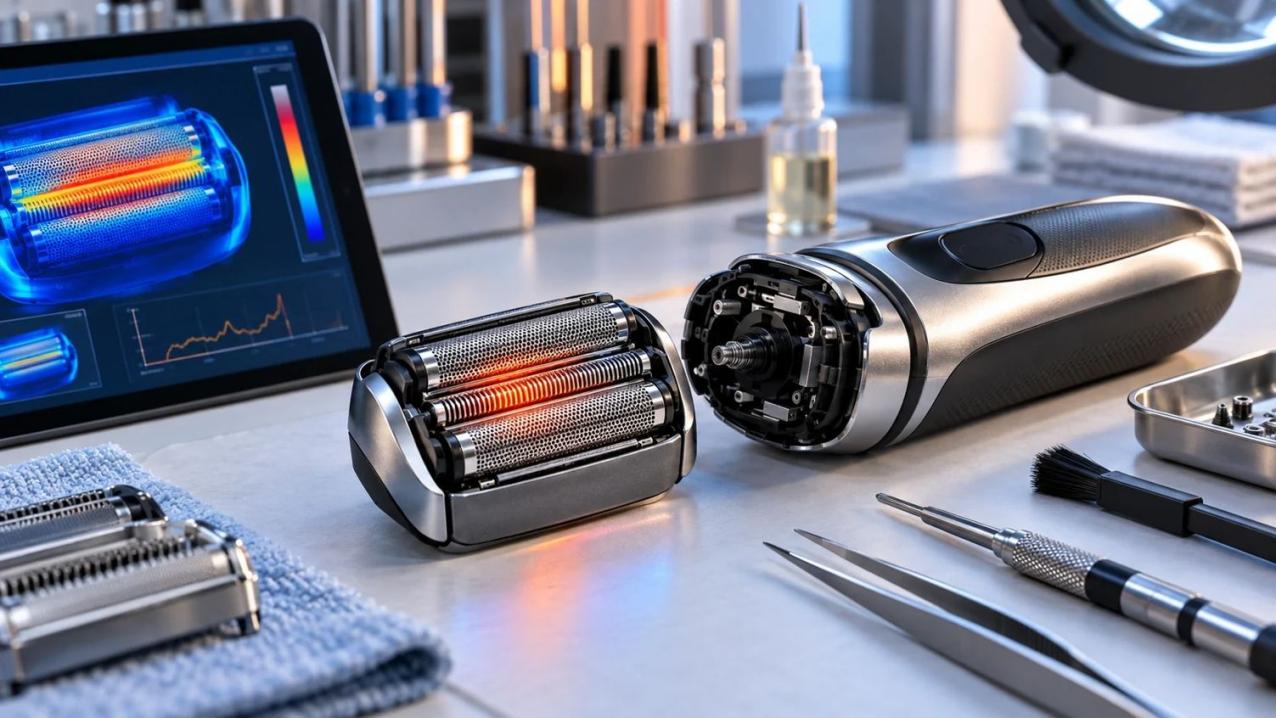
An electric shaver will not stay at room temperature while it runs. Heat comes from two different places: rubbing at the cutting head and work being done by the drive inside the grip. What deserves attention is a departure from the usual feel—perhaps a hot strip along one side of the foil, perhaps warmth rising out of the handle, perhaps an unfamiliar smell.
Ask the user to point to the place, rather than accepting “the shaver” as the location. Heat confined to the foil keeps the cutting pair in view. When the handle warms first beneath the user’s hand, the source may lie farther inside the machine.
Begin with a cool shaver and preserve the returned head as found. Compare matching points from foil to grip, because the route taken by the warmth is more informative than one peak reading.
A thermal camera is useful for the overall pattern. For a single spot, a probe returned to one marked position works just as well. Compare the two traces as the shaver runs. With a head fault, the foil can be gaining heat while the grip has barely changed. The opposite sequence deserves a look inside the body by qualified service personnel. End the test at an unsafe surface temperature or at the first electrical smell, smoke, change of speed, or distortion; continuing would damage the evidence as well as the appliance.
Check the model instructions before arranging a swap. If they permit the whole head to be removed, two cool bodies and their compatible heads provide a useful comparison. Fit the returned head to the reference body for one run. Let the equipment cool before trying the reference head on the returned body. Watch for the original hot patch in each pairing.
If the hot patch reappears on the approved body, the removable head is the common part, bringing its cutter, foil, trapped material, oil film, and seating into focus. Heat that remains in the original body belongs with qualified electrical personnel. A shaver whose instructions do not allow interchange should be assessed without this comparison.
Cleaning can reduce drag, but the received condition needs to survive in photographs. Brushing or rinsing also removes the pattern that could show where material had collected.
Look under the cutter and along both edges. Hair packed under one side is more useful information than a general picture of a dirty head. Photograph deposits beside the spring and latch too, before a brush dislodges them. Put the reference foil alongside the returned foil: a small change in contour is often lost in a photograph of the returned part alone.
Match the cleaning process to the head. Rinsing may be correct for one rotary assembly and harmful to a foil assembly intended for brushing. Wait until permitted parts are completely dry before powering the shaver. A reduced hot patch on the next run makes the obstruction relevant, although it cannot reveal whether the material accumulated before sale or during later use.
Choose the lubricant and dose stated for this cutting system. Adding more changes the head into an over-oiled sample, which answers a different question. Once the oil has spread, revisit the point that was warm before.
Less heat together with smoother cutting or less pulling supports a friction explanation. That response says nothing certain about how the original oil film was lost. It may have been removed in cleaning, depleted through use, or changed by another maintenance product. The finding belongs to this particular shaver until other units show the same response.
When cleaning and oil do little, inspect how the cutter sits below the foil. Extra contact on one edge can create a local hot spot without making the entire head look damaged.
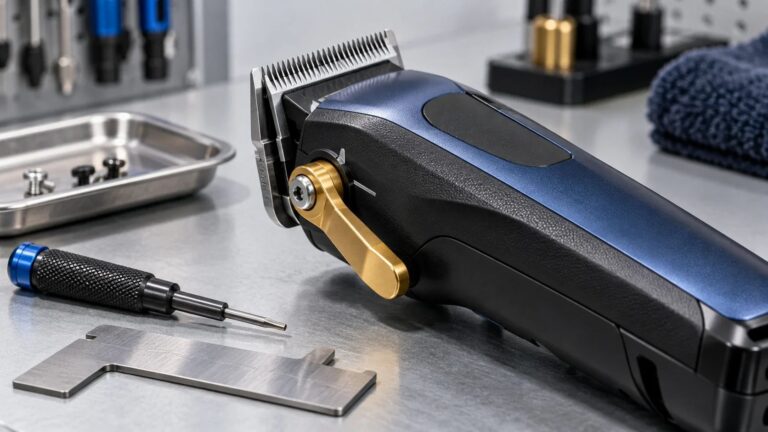
A dent changes clearance. Inspect the actual edge where the gap has narrowed. A raised burr may be touching the foil there; a broken tooth or cracked frame may have let the cutter tilt. Look for a strip of fresh polish at that contact, rather than recording all visible wear as one condition. “Used condition” is not.
With the right parts installed, the head should seat under its own fit and remain steady once latched. Keep the returned edges untouched for comparison. Once a foil has been bent back or a cutter ground, its earlier gap cannot be measured. The altered edge may also be unsafe against skin.
The top view can look normal while a spring sits beside its pocket or a spacer is absent from one side. That changes cutter height and pressure. A latch stopped short can have a similar effect.
Place the approved assembly beside the suspect one and compare the order of the parts and the finished height. If an approved replacement head removes the heat, retain both heads. Their dimensions and wear marks are the next evidence; the sentence “replacement fixed it” is not enough.
A return has already lived through cleaning, storage, and perhaps a fall or head replacement. Those details affect what its wear means.
Begin with what happened before the change. Perhaps another head was fitted, cleaning changed, or no event is known. Product age, lubricant, and a reported fall may help, but a missing answer should remain blank.
Unused samples answer a different question. Run several from the same starting condition. An isolated result keeps attention on that unit. A repeated pattern instead makes the common build or preparation more important.
Replace “overheated” with the exact area and the time when the change became clear. Pair the received-condition image with the cleaning and oiling results. If the design allowed the head swap, say which temperature pattern followed the removable head and which remained on the body. An unused batch unit and the retained approved sample help the reader judge the difference.
The work may leave two credible causes. That is still a useful result. It is better than closing the report around a cause that never repeated.
A moving cutting head cannot be required to remain cold. The order needs a test condition and a response tied to the observed fault.
If removing hair removes the hot spot, improve cleaning access or instructions. One-sided wear or a latch that does not close points toward component handling and assembly. Grip-first heating with an approved head belongs in a power-side review, not another foil replacement.
These are different controls because they address different physical causes. Treating them as one generic “overheating” defect makes recurrence harder to prevent.
The procedure should preserve enough context for a second technician to obtain a fair comparison. Link the starting condition and run time to the observation points, reference unit, and safety condition that ended the test. A numerical temperature boundary, if adopted, must be validated for this model and intended use under the applicable safety requirements.
Identification matters too. Keep the head type, washability, supplied lubricant, and approved replacement head beside the test procedure.
For an OEM shaver enquiry, SUOKE Electric is the starting point for confirming which head and body combination the buyer is considering. The electric shaver range can narrow the discussion to the intended family; the service guidance helps clarify the permitted care for its head. Through the contact page, buyers can send the head configuration, planned quantity, photographs, prior use, and a clear description of where warmth began.
SUOKE’s public pages do not state one acceptable head temperature for every model. Any acceptance boundary must be verified for the actual configuration and intended use under the relevant safety requirements.
First locate the heat. A cutting-surface-first pattern leads toward dirt, oil film, clearance, and support beneath the cutter. A grip-first pattern changes the investigation. Once one controlled warm-up produces a repeatable observation, the next order can preserve the condition that actually mattered.
No. Even warmth may come from ordinary cutting friction. A concentrated rise that changes the shaver’s cutting or feel is the pattern that needs investigation.
The repeat run links the heat to rubbing when the original spot cools and cutting becomes freer after the prescribed oil is applied. How that head became dry remains open; the returned unit may have been washed, used for a long period, or treated with a different product.
The handle leads the temperature rise while the neck and cutting surface follow or stay comparatively cool. That sequence weakens a foil-friction explanation.
No. Bending changes clearance, may create a sharp edge, and destroys useful evidence. Preserve the foil and replace it through the specified service method.