
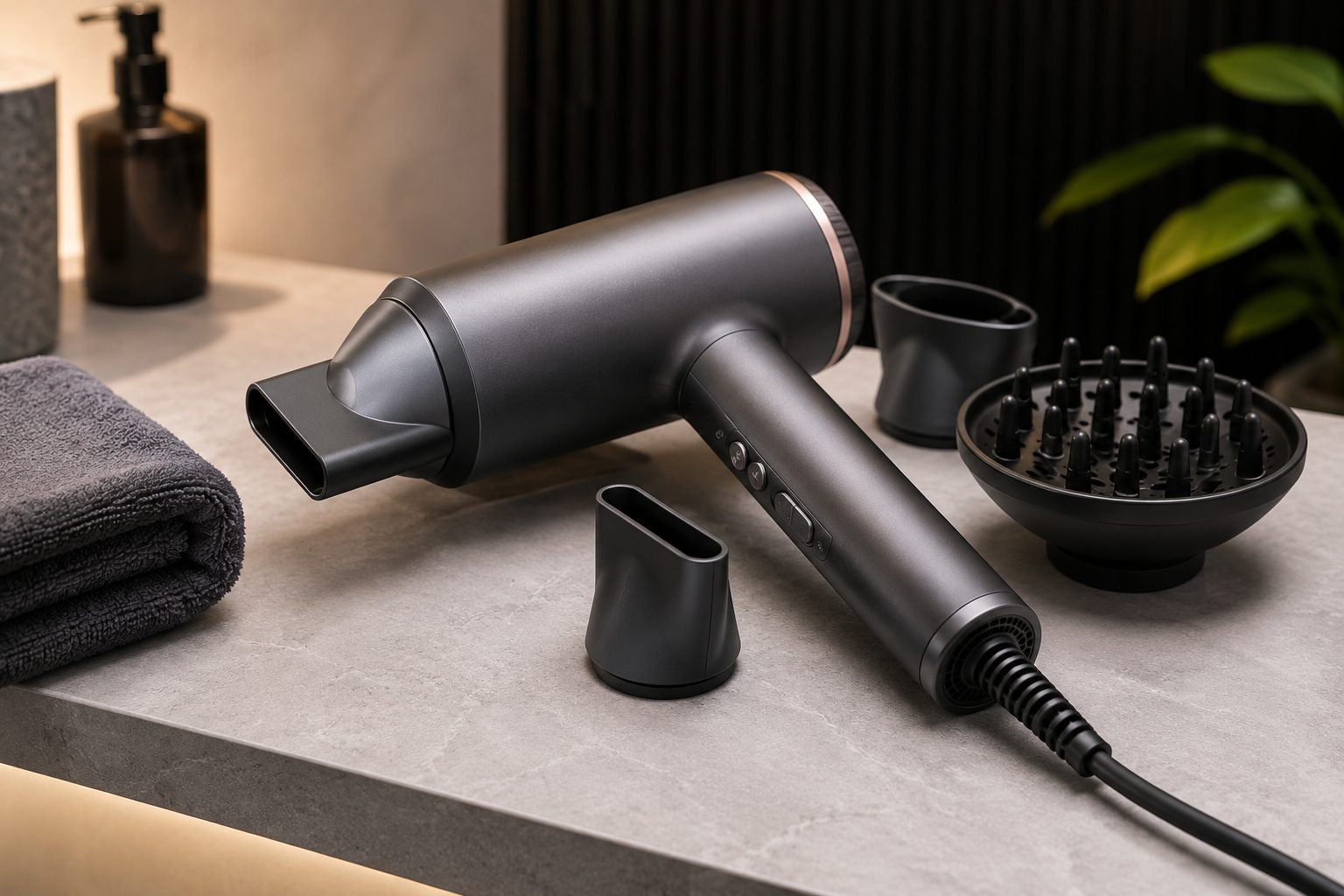
A high-speed hair dryer looks easy to specify on a sourcing sheet: a motor, watts, temperature settings, attachments, packaging, price. In practice, these factors do not indicate to a retail buyer whether the product will maintain consistent performance across hundreds or thousands of units produced. For private label brands, distributors, and beauty appliance buyers, an appropriate decision criterion is whether a dryer can meet intended channel requirements and balance price against such production variables as heat, airflow, noise, and variability. Sample testing, therefore, should be focused on objective performance rather than aesthetics.
The first sample often arrives with a long feature list. Start with the items customers will notice within the first few minutes of use.
Airflow, heat control, motor behavior, noise, weight, and attachment fit deserve more attention than decorative modes. If a supplier quotes motor speed or wattage, ask how those figures relate to actual drying performance.
No. Two dryers with similar rated power can feel very different because airflow depends on motor design, fan geometry, air channel resistance, and nozzle configuration.
A useful sample check includes:
Brands comparing available configurations can review the Hair Dryer range before deciding which platform suits their retail price band.
For buyers focused on portable models, the existing guide on compact and powerful travel hair dryers also shows why size, voltage, airflow, and attachments need to be considered together rather than separately.
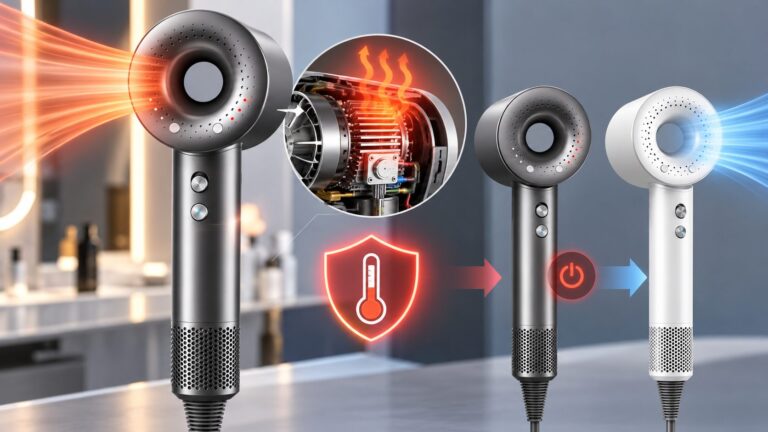
The cheapest way to make a dryer feel powerful is not always the safest way to build a good product. Excessive heat can create a strong first impression while producing an uncomfortable user experience.
Private label buyers need to compare temperature behavior under repeated use.
Run the dryer for more than a short demonstration. Check whether temperature remains reasonably stable and whether the housing becomes uncomfortable to hold.
If automatic temperature control is part of the specification, ask the factory what sensor is used, where it is placed, and how the control logic is tested during production.
The purchasing team should also test all included concentrators or diffusers. An attachment that restricts airflow too heavily can change heat behavior even when the dryer itself performs well.
For a retail project, these details matter because returns rarely say “airflow engineering problem.” They arrive as simpler complaints: too hot, too noisy, slow drying, loose nozzle, or uncomfortable handle.
Technical performance is only part of the buying decision. A dryer is held, rotated, packed, dropped, stored, and often used while the user is in a hurry.
Weight distribution matters. So does switch position.
A product that feels acceptable for 30 seconds may become tiring after ten minutes. Buyers serving salon channels should pay particular attention to grip diameter, balance, cord exit position, switch accessibility, and repeated operation.
Nozzles, filters, switches, cords, plugs, and removable covers are common service points.
During sampling, check whether the filter can be removed without damage, whether attachments remain secure after repeated fitting, and whether the cable bends naturally near the strain relief.
Private label projects should also confirm plug type and electrical configuration for the destination market before packaging artwork is finalized.
More broadly, retailers comparing several appliance categories can use the SUOKE product portfolio to see how hair care products can sit alongside grooming and oral care appliances.
The approved sample needs to become a production reference, not just a memory of what the buyer liked.
Record the motor configuration, rated power, plug, cable, attachments, color, logo position, packaging contents, manual, and any agreed functional settings.
Then ask what will be checked during production.
A useful discussion with the factory covers incoming components, electrical function, heating behavior, appearance, attachment fit, and final packaging. If any part is allowed to change between batches, that should be discussed before the first repeat order.
The supplier’s wider service and quality support process can also help buyers understand typical MOQ, lead-time, inspection, and after-sales arrangements before placing an order.
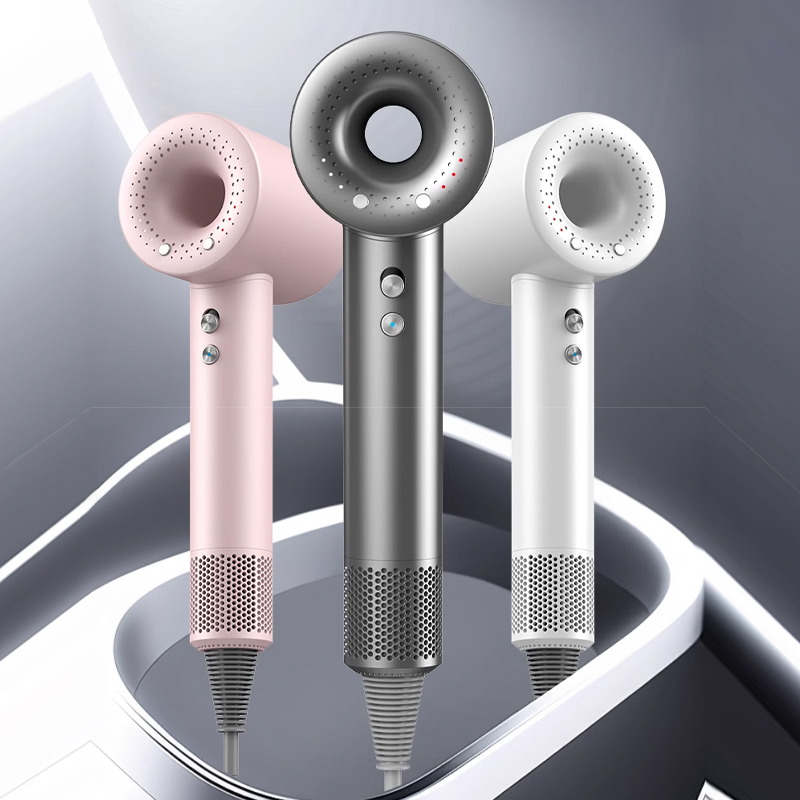
A salon supplier, marketplace seller, hotel distributor, and beauty retailer do not need exactly the same dryer.
Salon buyers may put greater weight on continuous operation, balance, cable design, and attachment stability. E-commerce brands need specifications that can be explained clearly online. Mass retailers may favor a simpler feature set that keeps the selling price within a familiar range.
The product therefore needs a job before it needs a feature list.
If a premium dryer costs more because of motor design, heat management, quieter operation, or packaging, the sales team needs to communicate that difference. If the difference is difficult to explain, the extra manufacturing cost may be difficult to recover at retail.
SUOKE Electric supplies personal care electrical appliances for overseas retail, distribution, and OEM/ODM projects. For buyers sourcing hair care products, its Hair Dryer range can be evaluated by motor performance, rated power, airflow, heat settings, plug type, attachments, packaging, and target market. Product specifications vary by model, so buyers should compare samples under the same test conditions and confirm configuration, branding, inspection, and delivery requirements before bulk production.
Bulk hair dryer sourcing should start with testing the performance, not the list of features. The buyer should be aware of airflow and temp control, how it will behave under prolonged use, accessories consistency on each device and what tests the factory will perform upon bulk production scale.The next step would be to make a shortlist of one or two options, establish the desired retail price, test the samples under identical conditions and agree on the final specification before moving on to discussing the bulk pricing. Buyers ready to compare a project can use the contact page to submit the required market, quantity, and customization details.
Start with airflow, heat stability, noise, housing temperature, attachment fit, and comfort during extended operation.
No. Actual drying performance also depends on the motor, fan, airflow path, heat control, and nozzle design.
Confirm the approved specification, plug, cord, attachments, logo, packaging, settings, inspection method, and production lead time.
Yes. Packaging, logo placement, colors, and product configuration can be discussed as part of an OEM/ODM project.
Target market, expected quantity, sales channel, required features, plug type, packaging needs, and desired customization help produce a more useful quotation.